The Lost Villages Under the Caspian
The Caspian Sea’s retreating waters have exposed something extraordinary beneath its surface. Ancient settlements, once lost to rising tides centuries ago, now reveal stone foundations and pottery fragments along the exposed seabed. Archaeologists’ve discovered medieval structures and bronze tools that shouldn’t exist according to historical records. These submerged villages tell a different story about the region’s past—one that challenges what scientists thought they knew about ancient civilizations along this mysterious shoreline.
Introduction
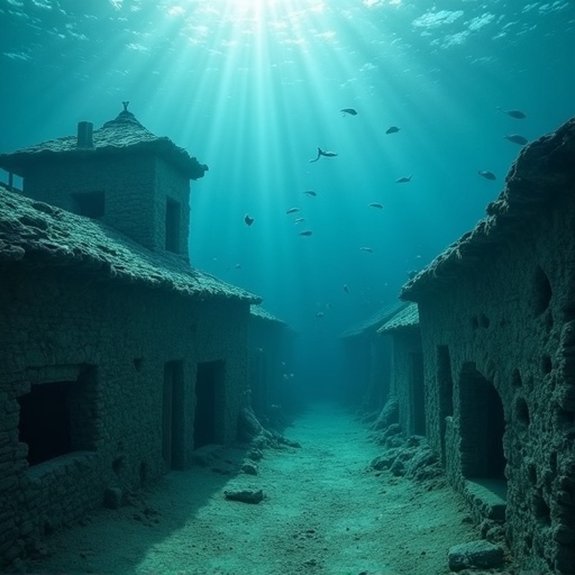
While the Caspian Sea‘s waters appear unchanging to casual observers, they’ve actually fluctuated dramatically over centuries, swallowing entire communities beneath their waves. The world’s largest inland body of water has risen and fallen by dozens of meters throughout history, forcing coastal populations to repeatedly abandon their homes. These submerged settlements now lie scattered across the seabed, preserving glimpses of vanished civilizations.
Archaeological evidence reveals that water levels have shifted due to climate variations, tectonic activity, and changes in river inflow. Medieval chronicles describe thriving ports that fishermen now trawl over unknowingly. Soviet-era research documented numerous underwater ruins along Azerbaijan’s, Iran’s, and Russia’s coastlines. Today’s advanced sonar technology continues uncovering these drowned villages, each one telling stories of adaptation, loss, and humanity’s eternal struggle against nature’s forces.
Caspian’s Dramatic Water Level Fluctuations
The Caspian Sea’s surface has swung between extremes that would seem impossible for most bodies of water. Between 1977 and 1995, it rose nearly three meters, flooding coastal settlements and infrastructure. Then it reversed course, dropping 1.5 meters from 1995 to 2020. Scientists’ve recorded fluctuations spanning seven meters over the past century alone.
These shifts aren’t tied to ocean patterns since the Caspian’s landlocked. Instead, they’re driven by regional climate changes affecting the Volga River, which supplies 80% of the sea’s inflow. Evaporation rates, precipitation patterns, and upstream dam construction all play critical roles. When water levels rise, entire communities disappear beneath the waves. When they fall, ancient ruins emerge from the depths, revealing settlements that’ve been submerged for decades or centuries.
Notable Cases or Sightings
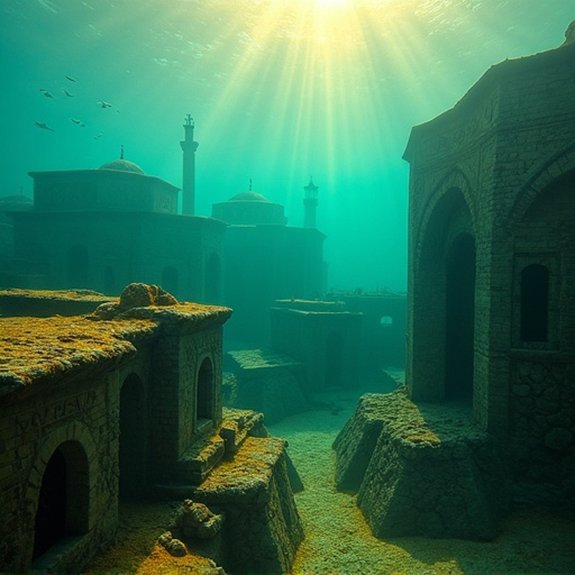
When water levels dropped dramatically in 2017, fishermen near Kazakhstan’s coast spotted stone foundations and pottery fragments jutting from newly exposed seabed. They’d discovered remnants of medieval settlements that vanished centuries ago. Similar findings occurred along Azerbaijan’s shoreline, where locals photographed intact brick walls and doorways emerging from receding waters.
Satellite imagery captured these exposures, revealing geometric patterns of streets and building footprints across multiple sites. Archaeologists documented over forty submerged locations between 2015 and 2020, when the Caspian reached its lowest point in decades. Near Derbent, Russia, divers found thirteenth-century structures thirty feet underwater, including preserved wooden beams and ceramic vessels. Iran’s coast yielded bronze tools and coins dating to the Sassanid period, confirming historical accounts of lost port cities that once thrived before the sea’s advance.
Common Theories or Explanations
Scientists studying these submerged settlements point to the Caspian’s volatile water levels as the primary culprit behind their disappearance. The sea’s experienced dramatic fluctuations throughout history, rising and falling by several meters over centuries. During medieval warm periods, evaporation rates increased considerably, exposing vast coastal areas where communities thrived. When cooler periods returned, reduced evaporation and increased river inflow caused rapid flooding.
Geologists’ve identified tectonic activity as another factor. The region’s seismic instability triggers underwater landslides and coastal subsidence, suddenly dropping entire villages below water level. Some researchers propose that ancient irrigation practices altered local water tables, destabilizing shorelines. Others suggest catastrophic storm surges overwhelmed settlements during extreme weather events. Archaeological evidence supports multiple causes working together, explaining why these villages couldn’t adapt quickly enough to survive.
Frequently Asked Questions
Can Divers Safely Explore the Submerged Villages Today?
Divers can’t safely explore the submerged villages today due to the Caspian Sea’s unpredictable conditions, poor visibility, strong currents, and fluctuating water levels. The murky waters and potential structural hazards make underwater exploration extremely dangerous.
What Artifacts Have Been Recovered From These Underwater Sites?
Archaeologists haven’t recovered significant artifacts from these sites yet. They’ve found pottery fragments, building foundations, and wooden structures in preliminary surveys. Most villages remain unexplored due to depth, visibility issues, and limited funding for underwater excavations.
Are There Any Plans to Drain or Excavate These Areas?
No major plans exist to drain these areas since it’d require massive engineering efforts. Scientists instead focus on underwater archaeological surveys using submersible technology. They’re mapping sites and recovering artifacts without disturbing the Caspian’s ecosystem.
Do Any Descendants of the Original Villagers Still Live Nearby?
Yes, many descendants still inhabit nearby coastal settlements. They’ve preserved oral histories and cultural traditions from their ancestors’ submerged villages. Some families regularly visit the shoreline closest to their ancestral homes, maintaining spiritual connections.
Which Specific Villages Are Accessible for Underwater Archaeological Research?
Researchers can’t access specific submerged Caspian villages for underwater archaeology since most lie too deep or in restricted areas. They’ve documented some shallow sites near Azerbaijan’s coast, but strong currents and poor visibility limit exploration.

The Lost Confederate Gold

The Curse of the Pharaohs: Myth or Reality?

The Lost Civilization in the Sahara
About The Author
