The Mystery of the Cave of the Swimmers
Deep in Egypt’s Sahara Desert, ancient paintings depict human figures appearing to swim through water that hasn’t existed for millennia. The Cave of the Swimmers challenges everything archaeologists thought they knew about prehistoric North Africa. These 10,000-year-old images shouldn’t exist in what’s been primarily desert throughout recorded history. Yet there they are—frozen in stone, their meaning lost to time, waiting to reveal their secrets.
Introduction

Deep in Egypt’s Sahara Desert, where endless sand dunes stretch toward Libya’s border, ancient rock art adorns the walls of a remote cave that shouldn’t exist. The Cave of the Swimmers contains prehistoric paintings depicting human figures in swimming positions, created when this barren landscape was lush savanna. Hungarian explorer László Almásy discovered the site in 1933 within the Gilf Kebir plateau, naming it after the distinctive swimming motions captured in the 10,000-year-old artwork.
These paintings challenge everything scientists thought they knew about the Sahara’s history. The swimmers appear to dive, float, and stroke through water in a place that’s received virtually no rainfall for millennia. Their discovery sparked debates about climate change, human migration, and the radical transformation of North Africa’s environment.
Discovery in 1933 Egypt
László Almásy’s October 1933 expedition nearly ended in disaster before he made his greatest discovery. The Hungarian explorer’s team had run dangerously low on water while searching Egypt’s remote Gilf Kebir plateau. As they navigated the sandstone cliffs of Wadi Sura, Almásy spotted a cave entrance partially hidden by fallen rocks.
Inside, he couldn’t believe what his flashlight revealed. Hundreds of prehistoric paintings covered the walls, including mysterious figures that appeared to be swimming. The cave’s location made this discovery even more puzzling—it sat in one of Earth’s driest regions, hundreds of miles from any water source. Almásy photographed the 10,000-year-old artwork and documented the site’s exact coordinates. His find would spark decades of debate among archaeologists about why ancient peoples painted swimmers in the heart of the Sahara Desert.
Notable Cases or Sightings
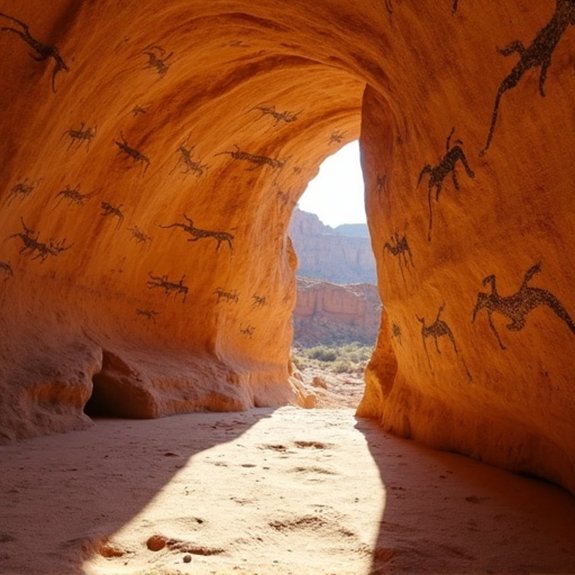
What exactly did researchers find when they examined the cave’s paintings more closely? They’ve identified approximately 5,000 individual figures across the cave walls, including the famous swimming humans that sparked decades of debate. László Almásy’s initial documentation captured only a fraction of these images. In 1963, Belgian explorer Jean-Philippe Lhote catalogued additional panels showing archers, cattle, and giraffes alongside the swimmers.
Most intriguingly, researcher Andras Zboray discovered new paintings in 2002 depicting headless beasts and tiny human handprints. German archaeologist Rudolph Kuper’s team later found evidence of repeated visits to the site between 8,000 and 6,000 BCE. The swimmers themselves appear in various positions—some diving, others floating horizontally. These figures don’t match any known Egyptian artistic traditions, suggesting they’re unique to this prehistoric culture.
Common Theories or Explanations
While the swimming figures initially seemed straightforward, archaeologists have proposed several competing theories about their true meaning. Some experts believe they’re depicting actual swimmers in ancient lakes that existed during the region’s wetter climate 10,000 years ago. Others argue the figures represent floating spirits in the afterlife, pointing to similar motifs in Egyptian funerary art.
A third theory suggests they’re not swimmers at all but rather humans in ritual poses or dance movements. The surrounding animal paintings support this interpretation, as they’d match ceremonial hunting scenes. Climate data has complicated matters further—some researchers now think the Sahara wasn’t wet enough for swimming when these paintings were created. The figures’ unusual horizontal positioning and lack of clear water representation have led certain scholars to propose they symbolize shamanistic flight or trance states.
Frequently Asked Questions
Can Tourists Visit the Cave of the Swimmers Today?
Yes, tourists can visit the Cave of the Swimmers today, though it’s located in Egypt’s remote Gilf Kebir plateau. They’ll need permits, guides, and proper expedition equipment since it’s deep in the Sahara Desert.
What Preservation Methods Protect the Cave Paintings From Deterioration?
Scientists protect the cave paintings through controlled access, limiting visitor numbers, and monitoring humidity levels. They’ve installed barriers preventing direct contact, use specialized lighting that won’t damage pigments, and regularly document the artwork’s condition.
Are There Similar Prehistoric Swimming Scenes Found in Other African Caves?
No, researchers haven’t found similar prehistoric swimming scenes in other African caves. The Cave of the Swimmers remains unique with its distinctive figures that appear to be floating or swimming, making it an archaeological anomaly.
What Filming Permits Are Required for Documentary Work at the Site?
Documentary crews need permits from Egypt’s Ministry of Tourism and Antiquities. They’ll require special photography licenses, pay location fees, and coordinate with local authorities in the New Valley Governorate who oversee the Gilf Kebir region.
How Much Does a Guided Expedition to the Cave Typically Cost?
Guided expeditions to the Cave of the Swimmers typically cost between $3,000 and $8,000 per person. The price varies based on trip duration, group size, and whether travelers choose basic camping or luxury desert accommodations.

The Lost City of the Monkey God
Ancient Structures Aligned With the Stars
Is There a Hidden Civilization Beneath the Grand Canyon?
About The Author
