The Myth of Mu: Lost Pacific Continent
The legend of Mu captivates those who search for lost civilizations beneath Pacific waters. James Churchward’s controversial writings transformed obscure ancient texts into tales of humanity’s sunken birthplace. While scientists dismiss the continent’s existence, believers point to unexplained ruins and geological anomalies across the ocean floor. The debate between archaeological evidence and speculation continues to fuel expeditions, each one hoping to prove whether 12,000 years ago, something extraordinary really did vanish beneath the waves.
Introduction
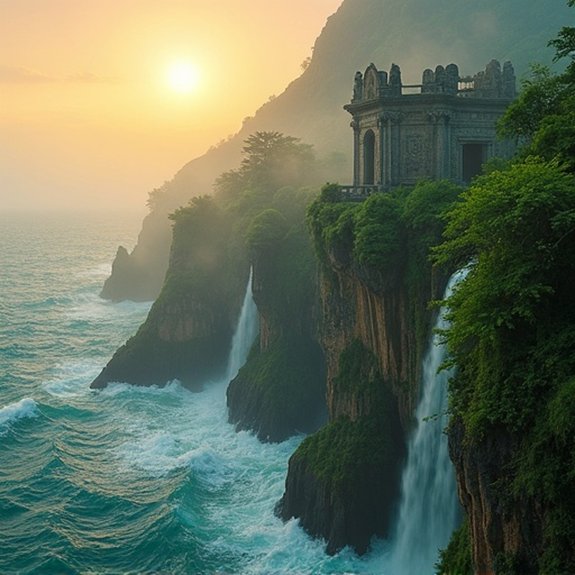
While Atlantis dominates popular imagination as history’s most famous lost continent, another mythical landmass has captivated explorers, mystics, and pseudoarchaeologists for over a century: the continent of Mu. This supposedly vast Pacific civilization allegedly stretched from Hawaii to Easter Island before vanishing beneath the waves thousands of years ago.
The concept emerged in the late 19th century when amateur archaeologist Augustus Le Plongeon misinterpreted Mayan texts, claiming they described an ancient motherland called “Mu.” British inventor James Churchward later popularized and expanded the myth through his 1926 book series, asserting he’d discovered ancient tablets in India that detailed Mu’s 64-million-person empire. Despite lacking scientific evidence, the legend’s endured, inspiring countless books, theories, and expeditions searching for remnants of this phantom Pacific paradise.
James Churchward’s 1926 Publications
Five books comprised Churchward’s explosive series that thrust the Mu legend into mainstream consciousness, beginning with “The Lost Continent of Mu” in 1926. This inaugural work claimed Mu was humanity’s birthplace, a vast Pacific continent that’d supposedly sunk 12,000 years ago. Churchward insisted he’d decoded ancient tablets shown to him by an Indian priest, revealing Mu’s 64-million-person civilization.
His subsequent publications expanded these claims dramatically. “The Children of Mu” (1931) traced survivor colonies across the globe. “The Sacred Symbols of Mu” (1933) interpreted worldwide religious iconography as Lemurian remnants. “The Cosmic Forces of Mu” (1934-35) explored the continent’s alleged advanced technology. Despite lacking archaeological evidence and facing scholarly criticism, Churchward’s books captivated Depression-era readers who craved escapist mysteries and alternative histories.
Notable Cases or Sightings
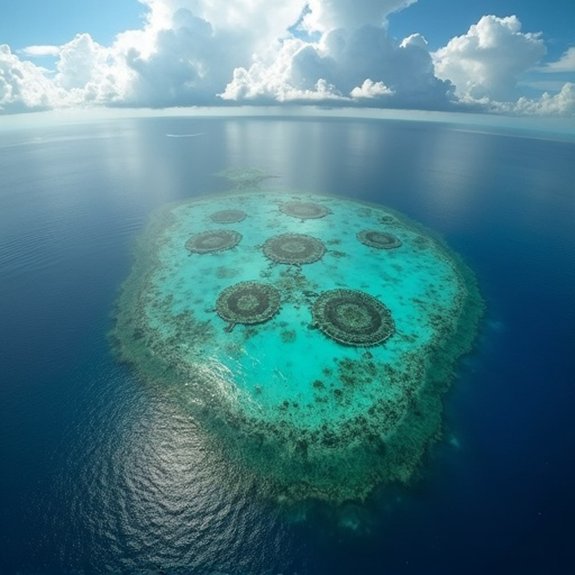
Mount Shasta became ground zero for modern Mu sightings when Frederick Spencer Oliver’s 1905 novel “A Dweller on Two Planets” placed Lemurian survivors inside the California peak. By the 1930s, locals reported seeing robed figures near the mountain who’d allegedly descended from these hidden civilizations. Guy Ballard claimed he’d met Saint Germain there in 1930, spawning the “I AM” movement that connected Mu’s survivors to mystical teachings.
Throughout the Pacific, various archaeological sites attracted Mu theorists. Easter Island’s moai statues, Nan Madol’s stone ruins in Micronesia, and Japan’s Yonaguni Monument underwater formations all became “evidence” of the lost continent. Believers interpreted these locations as remnants of Mu’s advanced civilization, despite archaeologists’ conventional explanations. The lack of verified physical evidence hasn’t deterred enthusiasts from claiming new discoveries annually.
Common Theories or Explanations
Although geological evidence contradicts the existence of a Pacific continent, proponents have developed elaborate theories to explain Mu’s disappearance. James Churchward claimed volcanic activity and earthquakes destroyed the continent in a single catastrophic night, sinking it beneath the waves. Others suggest pole shifts or asteroid impacts triggered the submersion.
Alternative theorists propose Mu wasn’t a physical landmass but existed in higher dimensions, accessible through altered consciousness. Some link it to extraterrestrial colonies that relocated before Earth’s geological upheavals. Pseudoarchaeologists argue that mainstream science suppresses evidence of advanced prehistoric civilizations.
Modern supporters often merge Mu with Lemuria theories, creating hybrid explanations involving tectonic plate movements unknown to conventional geology. They’ve interpreted Pacific island ruins, underwater formations, and megalithic structures as remnants of Mu’s lost civilization.
Frequently Asked Questions
How Does the Mu Myth Differ From Atlantis and Lemuria Legends?
The Mu myth places a lost continent in the Pacific Ocean, while Atlantis supposedly existed in the Atlantic. Lemuria’s theorized in the Indian Ocean. Mu’s civilization allegedly predates both others and influenced Mesoamerican cultures.
What Geological Evidence Definitively Disproves the Existence of Mu?
Geologists point to the Pacific Ocean’s ancient seafloor, which hasn’t had continental crust for millions of years. Deep ocean drilling shows no submerged granite formations, and plate tectonics can’t explain a vanished continent there.
Which Modern Pacific Cultures Have Oral Traditions About Mu?
No modern Pacific cultures have authentic oral traditions about Mu. The concept originated from misinterpreted Maya texts by James Churchward in the 1920s. Pacific islanders’ actual origin stories don’t reference any sunken continent called Mu.
What Underwater Archaeological Sites Are Mistakenly Attributed to Mu?
Researchers often mistakenly link Yonaguni Monument off Japan and Nan Madol in Micronesia to Mu. They’ve also incorrectly attributed submerged formations near Cuba, India’s Gulf of Khambhat structures, and various Pacific seamounts to this mythical continent.
How Has the Mu Myth Influenced New Age Spiritual Movements?
New Age movements’ve embraced Mu as humanity’s spiritual birthplace, claiming its inhabitants possessed psychic powers and advanced consciousness. They believe Lemurians’ wisdom survives through channeling, crystal healing, and teachings about ascending to higher dimensions.
Who Were the Cahokians — and Why Did They Disappear?

What Happened to the Vanished Village of Anjikuni?

The Forgotten Tomb Beneath the Louvre
About The Author
