Mythical Birds: Thunderbirds, Garudas, Simurgh
Across continents and centuries, civilizations have documented encounters with magnificent avian beings that defy natural explanation. They’ve carved thunderbirds into totems, painted garudas on temple walls, and inscribed the simurgh in ancient manuscripts. These aren’t mere decorative symbols. Historical accounts describe these creatures intervening in human affairs, delivering prophecies, and wielding supernatural powers. What compelled diverse cultures to independently chronicle such similar beings remains one of mythology’s most intriguing mysteries.
Introduction

Legends of magnificent winged creatures have captivated humanity since ancient times, soaring through the stories, religions, and artwork of cultures across the globe. These mythical birds represent power, wisdom, and divine connection in their respective traditions. The Thunderbird commands Native American mythology as a supernatural entity that creates thunder with its wingbeats and lightning with its eyes. In Hindu and Buddhist traditions, Garuda serves as the mount of Vishnu and symbolizes speed, martial prowess, and protection against evil. Persian mythology celebrates the Simurgh, an ancient benevolent creature possessing immense knowledge and healing powers. Each bird embodies its culture’s values and beliefs while sharing universal themes of transformation, spiritual ascension, and the bridge between earthly and celestial domains. They’ve influenced art, literature, and religious practices for millennia.
Ancient Texts Describe Divine Birds
Sacred texts from antiquity preserve detailed accounts of divine birds that served as messengers, protectors, and symbols of cosmic order. The Rigveda mentions Garuda carrying the elixir of immortality from heaven, while Persian texts describe the Simurgh‘s wisdom spanning thousands of years. Native American oral traditions, later transcribed, detail Thunderbirds creating storms with their wingbeats.
These accounts weren’t merely symbolic. Ancient writers treated these beings as real entities inhabiting specific domains. The Mahabharata maps Garuda’s genealogy and battles. The Shahnameh chronicles the Simurgh raising the hero Zal on Mount Alborz. Lakota winter counts mark years by Thunderbird sightings. Each culture’s texts assign distinct roles: Garuda destroys serpents, the Simurgh heals with its feathers, and Thunderbirds bring rain to parched lands.
Notable Cases or Sightings
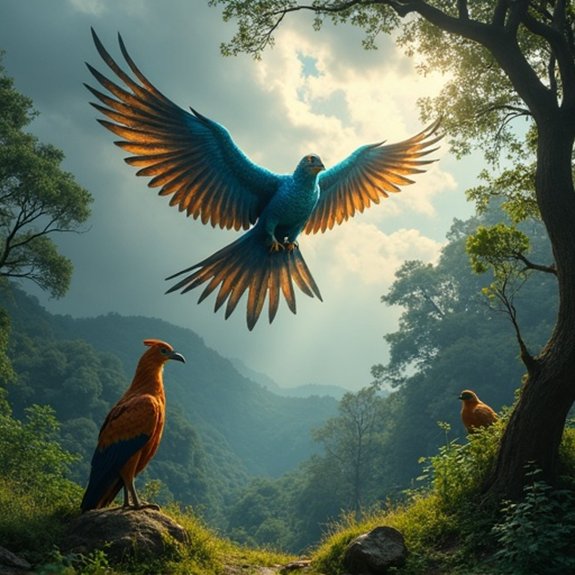
While ancient texts described divine birds as theological beings, modern witnesses have reported encounters with enormous avian creatures that defy conventional explanation. In 1977, three Illinois boys claimed a massive bird with a ten-foot wingspan attempted to carry off one of them. Native American communities across North America’ve documented Thunderbird sightings for generations, describing birds capable of creating thunder through wingbeats.
In Iran, multiple witnesses near Mount Damavand reported seeing a colossal golden bird matching Simurgh descriptions in 2004. Similarly, Indonesian villagers’ve occasionally reported Garuda-like creatures near ancient temple sites, though skeptics attribute these to misidentified eagles. Cryptozoologists’ve catalogued hundreds of giant bird encounters worldwide, noting consistent details: wingspans exceeding twenty feet, unusual vocalizations, and appearances during storms.
Common Theories or Explanations
Although cryptozoologists propose various explanations for mythical bird sightings, most scientists attribute these encounters to misidentification of known species or psychological phenomena. Large raptors like condors and eagles, when viewed from unusual angles or distances, can appear much bigger than they actually are. Atmospheric conditions sometimes create optical illusions that distort an animal’s apparent size.
Psychologists point to pattern recognition errors and cultural conditioning. People who’ve heard thunderbird legends might interpret ambiguous visual data through that mythological lens. Sleep paralysis episodes explain some garuda encounters, particularly those involving bedroom visitations. The brain’s tendency to fill information gaps with familiar narratives contributes to these misperceptions.
Paleontologists suggest that fossil discoveries of pterosaurs and terror birds may have inspired ancient mythical bird stories, which then influenced modern interpretations of unusual sightings.
Frequently Asked Questions
What Rituals or Ceremonies Traditionally Honor These Mythical Birds in Different Cultures?
Native Americans perform thunder dances and vision quests to honor Thunderbirds. Hindus conduct Garuda Puja ceremonies with offerings and mantras. Persians recite Simurgh’s stories during Nowruz celebrations and incorporate the bird’s imagery in Sufi rituals.
How Are Thunderbirds, Garudas, and Simurgh Depicted Differently in Modern Pop Culture?
Modern pop culture depicts Thunderbirds as Native American symbols in sports logos, Garudas appear in anime and video games as divine mounts, while Simurgh’s featured in fantasy literature as wise, ancient creatures offering guidance.
What Symbolic Meanings Do Feather Colors Represent for Each Mythical Bird Species?
Thunderbirds’ black feathers symbolize storm power and protection. Garudas display golden plumage representing divine wisdom and sun’s energy. The Simurgh’s copper feathers embody healing knowledge, while its multicolored wings reflect unity between earthly and celestial domains.
Which Museums Display the Most Extensive Collections of Mythical Bird Artifacts?
Major museums don’t typically categorize collections as “mythical bird artifacts.” However, institutions like the Metropolitan Museum, British Museum, and Smithsonian’s National Museum of the American Indian showcase extensive Native American, Asian, and Persian artworks featuring these creatures.
How Do Indigenous Communities Today Preserve Oral Traditions About These Sacred Birds?
Indigenous communities preserve sacred bird traditions through storytelling ceremonies, dance performances, and artistic representations. Elders teach youth through oral narratives while craftspeople create traditional regalia. They’ve also adapted modern recording technologies to document ancestral knowledge.

The Cailleach and Seasonal Myths

The Underworld Birds: Psychopomps

The Easter Dragon / Serpent Myths
About The Author
