Mythical Guardian Beasts at City Gates
Throughout history, civilizations’ve placed stone sentinels at their most vulnerable points—city gates and temple entrances. These mythical guardian beasts, from Mesopotamian lamassu to Chinese stone lions, weren’t mere decorations. They served a purpose that transcended their imposing physical presence. What drove ancient peoples to carve these protectors from massive blocks of stone? The answer reveals something profound about humanity’s relationship with the supernatural and the unknown threats that lurked beyond city walls.
Introduction
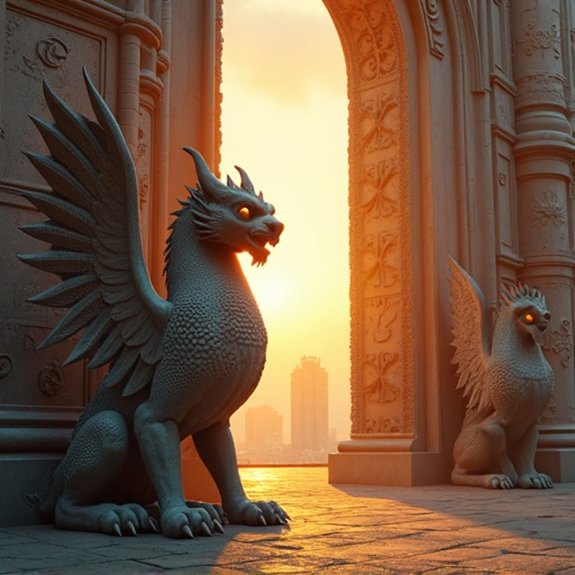
Throughout history, cultures across the world have imagined powerful creatures that stand watch over sacred places, treasures, and the boundaries between worlds. These mythical guardian beasts serve as supernatural protectors, embodying the strength and wisdom civilizations hope will shield them from harm. City gates, where the vulnerable meet the unknown, have attracted particular attention as sites requiring divine protection.
From China’s stone lions to Mesopotamia’s lamassu, these creatures combine features of multiple animals or merge human and beast characteristics. They’re positioned strategically at entrances, their fierce expressions and imposing forms meant to ward off evil spirits and hostile forces. While their appearances vary dramatically across cultures, guardian beasts share common purposes: they mark territorial boundaries, demonstrate a city’s power, and provide psychological comfort to inhabitants who believe in their protective abilities.
Ancient Mesopotamian Temple Lions
Stone lions flanked the entrances of Mesopotamian temples as early as 3000 BCE, their massive forms carved from single blocks of limestone or basalt. These guardians weren’t mere decorations—they embodied divine protection against evil spirits and chaos. Sculptors positioned them in pairs, facing outward with bared teeth and fierce expressions that warned intruders of the sacred space’s power.
The lions represented Ishtar’s strength and served as intermediaries between mortal and divine domains. Their placement followed strict religious protocols, with priests conducting consecration rituals to activate their protective properties. Archaeological evidence from Ur, Babylon, and Nineveh reveals standardized artistic conventions: muscular bodies, stylized manes, and eyes inlaid with precious stones. These architectural elements influenced later civilizations’ guardian traditions throughout the ancient Near East.
Notable Cases or Sightings
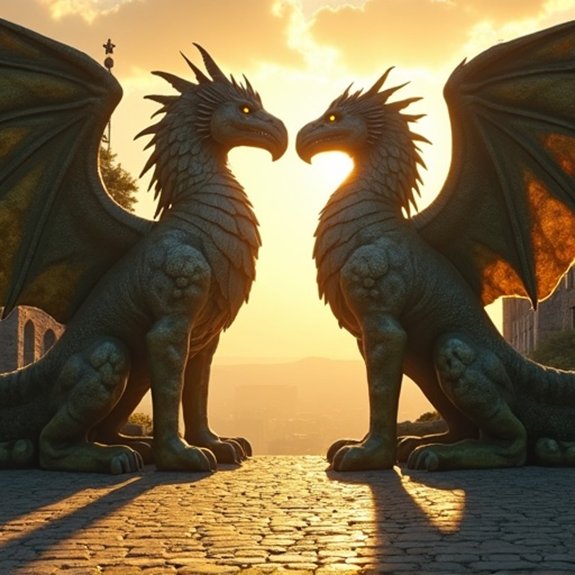
While ancient temple lions remained fixed in stone, reports of living guardian beasts have emerged across cultures for millennia. China’s Forbidden City guards claimed they’d witnessed stone lions moving at night during the Ming Dynasty. Similar accounts surfaced in 1953 when Bangkok temple workers reported their gate statues shifting positions between dusk and dawn.
Modern sightings haven’t ceased. In 2019, security footage from Singapore’s Merlion Park showed unexplained shadows circling the iconic statue during a thunderstorm. Japanese witnesses near Kyoto’s shrine gates have reported glimpsing enormous spectral dogs since the 1990s. Archaeological teams in Egypt documented strange howling near sphinx monuments in 2021, though they couldn’t identify the source. These incidents fuel ongoing debates about whether guardian beasts exist beyond mythology.
Common Theories or Explanations
Because guardian beast sightings span centuries and continents, researchers have developed several theories to explain these phenomena. Anthropologists suggest they’re cultural manifestations of collective anxiety about external threats. Cities facing invasion or plague often report increased guardian activity, supporting this psychological interpretation.
Folklorists propose these beasts represent archetypal protectors found in humanity’s shared unconscious. They’ve documented similar creatures across unconnected civilizations, from Chinese stone lions to Egyptian sphinxes.
Paranormal investigators argue for literal supernatural entities drawn to population centers. They cite electromagnetic anomalies near city gates and unexplained defensive incidents during historical sieges.
Historians offer the most pragmatic explanation: misidentified architectural features combined with local legends. Shadows from gargoyles, weather-worn statues, and strategic military victories attributed to divine intervention create lasting myths that evolve through retelling.
Frequently Asked Questions
How Much Does It Cost to Commission a Guardian Beast Statue Today?
A sculptor’s commission for a guardian beast statue typically costs $10,000 to $500,000 today. The price depends on size, material choice, and the artist’s reputation. Stone versions cost more than bronze or fiberglass alternatives.
Are There Specific Rituals for Activating or Consecrating Guardian Beast Sculptures?
Yes, priests traditionally perform consecration ceremonies that include burning incense, chanting sacred texts, and conducting “eye-opening” rituals where they’ll paint the statue’s eyes last, symbolically awakening the guardian spirit within the sculpture.
What Materials and Tools Were Traditionally Used to Carve These Monuments?
Ancient craftsmen carved guardian beasts using granite, marble, or limestone blocks. They’d employ iron chisels, bronze hammers, wooden mallets, and abrasive stones for polishing. Master sculptors often blessed their tools before beginning these sacred monuments.
Can Tourists Touch or Photograph Guardian Beasts at Historical Sites?
Tourists can typically photograph guardian beasts at most historical sites, but they’re usually prohibited from touching them to prevent damage. Site managers often install barriers and post signs that clearly restrict physical contact while allowing photography.
Which Modern Cities Still Install New Guardian Beast Statues at Entrances?
Singapore’s installed new Merlion statues at key locations, while Chinese cities like Beijing and Shanghai continue adding stone lions at government buildings. Tokyo’s placed modern komainu at shrines, and Bangkok’s erected new yaksha guardians recently.



About The Author
