The Cosmic Serpent & DNA Symbolism
The cosmic serpent appears in creation myths worldwide, from Aboriginal rainbow serpents to Mesoamerican feathered deities. Anthropologist Jeremy Narby first noticed something peculiar about these ancient symbols—they’re strikingly similar to DNA’s double helix structure. When shamans describe their ayahuasca visions, they often report seeing intertwined serpents or twisted ladders of light. How did ancient cultures visualize molecular biology thousands of years before its scientific discovery?
Introduction
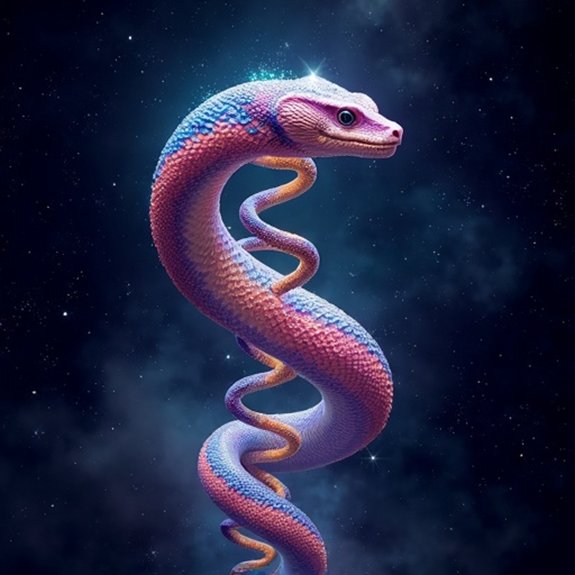
Why have serpents appeared as sacred symbols in cultures separated by vast oceans and millennia? This enduring mystery has captivated anthropologists and historians who’ve discovered striking parallels between ancient serpent mythology and modern understanding of DNA’s double helix structure. From Aboriginal rainbow serpents to Mesoamerican feathered serpents, these sinuous beings consistently represent creation, knowledge, and life’s fundamental essence.
The connection isn’t merely visual. Indigenous shamans have long described serpentine visions during altered states that remarkably mirror microscopic DNA structures they couldn’t have known existed. These correlations suggest humanity’s collective unconscious might’ve intuited molecular biology’s foundations through symbolic language. This exploration examines how serpent symbolism across diverse cultures potentially reflects an innate understanding of life’s genetic blueprint, bridging ancient wisdom with contemporary science.
Ancient Shamanic Ayahuasca Visions
Anthropologists studying these experiences note striking parallels between shamanic descriptions and molecular biology’s DNA structure. The serpents appear as twisted ladders, emit rainbow-colored light, and communicate through visual symbols rather than words. Many shamans claim these serpentine beings taught them medicinal plant properties and healing techniques. This cross-cultural consistency suggests ayahuasca may provide access to biomolecular information encoded within human consciousness itself.
Notable Cases or Sightings
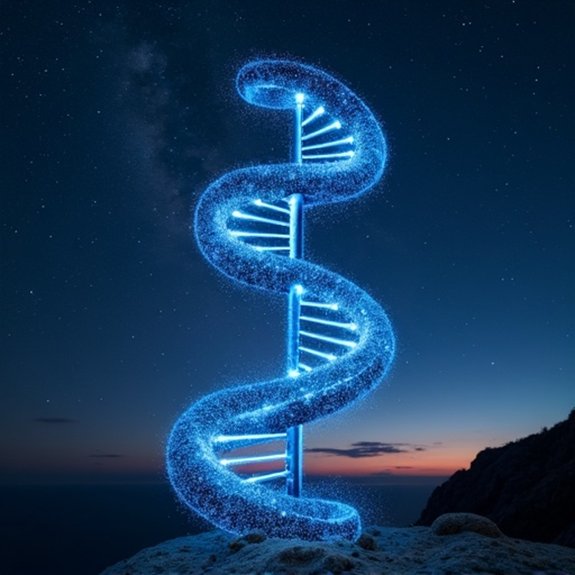
While contemporary researchers have documented thousands of ayahuasca experiences, several cases stand out for their extraordinary DNA-related visions. Anthropologist Jeremy Narby’s 1990s fieldwork revealed Ashaninca shamans who’d described seeing “twisted ladders” and “intertwined serpents” centuries before Watson and Crick discovered DNA’s structure. They’d claimed these visions taught them medicinal plant combinations.
Biologist Francis Huxley documented similar accounts among Brazilian shamans who reported seeing “cosmic ropes” containing life’s instructions. In 2018, neurobiologist Dr. Monica Gagliano published her experience of perceiving molecular structures during ceremony, later matching them to actual plant compounds she hadn’t previously studied.
Multiple participants at Peru’s Temple of the Way of Light have independently reported identical visions of serpentine helixes transforming into genetic sequences, despite having no scientific background or prior knowledge of molecular biology.
Common Theories or Explanations
Scientists and shamans offer strikingly different explanations for these DNA visions. Neurobiologists attribute ayahuasca‘s serpentine imagery to DMT‘s activation of specific visual cortex regions that process geometric patterns. They’ve identified how the compound triggers phosphenes—internal light phenomena that create spiral and helix formations behind closed eyelids.
Indigenous healers claim they’re accessing actual molecular information through plant consciousness. Anthropologist Jeremy Narby’s research suggests shamanic knowledge of medicinal compounds couldn’t have emerged through trial and error alone. He proposes that ayahuasca enables direct communication with DNA’s biophotonic emissions.
Some researchers explore middle ground, theorizing that psychedelics release pattern recognition abilities that let humans perceive biological structures intuitively. This theory explains why multiple cultures independently developed the caduceus and twin-serpent symbols millennia before Watson and Crick’s discovery.
Frequently Asked Questions
How Can I Safely Explore Serpent Symbolism Through Meditation or Visualization Practices?
One can safely explore serpent symbolism by starting with guided meditations, setting clear intentions, grounding beforehand, and visualizing protective light. They’ll benefit from journaling insights and working with experienced practitioners when diving deeper into practice.
Are There Specific Crystals or Stones Associated With Cosmic Serpent Energy?
Several crystals resonate with cosmic serpent energy. Practitioners often work with serpentine stone, moldavite, and labradorite. They’ll also use clear quartz for DNA activation, amethyst for spiritual insight, and obsidian for grounding transformative energies.
What Books Best Explain the Connection Between Serpent Mythology and DNA?
Jeremy Narby’s “The Cosmic Serpent” directly explores how indigenous shamans’ serpent visions mirror DNA’s double helix structure. Graham Hancock’s “Supernatural” and Carl Jung’s works on serpent archetypes also examine these profound symbolic connections.
Do Other Psychedelics Besides Ayahuasca Produce Similar Serpent or DNA Visions?
Yes, researchers’ve documented serpent and DNA-like visions with psilocybin mushrooms, DMT, and mescaline. Users frequently report seeing intertwined snakes, double helixes, and ladder-like structures across different psychedelics, suggesting these patterns aren’t unique to ayahuasca.
How Do Modern Indigenous Communities Interpret the Cosmic Serpent Today?
Modern indigenous communities interpret the cosmic serpent as a teacher spirit bridging physical and spiritual domains. They’ve incorporated some Western scientific perspectives while maintaining traditional views of the serpent as wisdom keeper and healing guide.
The Forest Spirits: Kodama, Dryads
The Grootslang: Mixed Beasts in Myth
The “World Egg” Creation Myth
About The Author
