The Forest Spirits: Kodama, Dryads
Across centuries, witnesses have reported encounters with ethereal beings dwelling within ancient forests. Japan’s Kodama and Greece’s Dryads represent more than folklore—they’re manifestations of humanity’s primal recognition that trees possess consciousness. These spirits don’t merely inhabit woodlands; they embody them. Modern environmentalists now invoke their legends as ecological warnings. But what happens when traditional forest guardians vanish from collective memory? The answer reveals something unsettling about humanity’s future.
Introduction
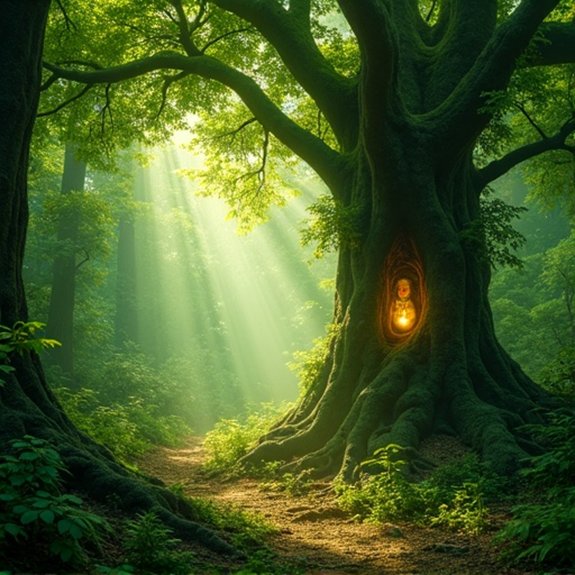
While ancient forests whisper with more than just wind through leaves, countless cultures have long recognized the presence of supernatural beings dwelling within these wooded domains. These forest spirits manifest differently across civilizations, yet they’ve consistently represented humanity’s deep connection to nature’s mysteries.
Japanese folklore speaks of kodama, tree spirits that inhabit ancient groves and protect their woodland homes. They’re often depicted as ethereal beings whose presence indicates a forest’s health and significance. Meanwhile, Greek mythology tells of dryads, nymphs specifically bound to oak trees, who’d perish if their host tree died.
Both entity types reflect fundamental human beliefs about nature’s consciousness. They’ve served as cautionary figures, reminding people that forests aren’t merely resources but living systems deserving respect and protection.
Ancient Animistic Forest Worship
Before organized religions took root across continents, humanity’s earliest spiritual practices centered on the reverence of forests as sacred spaces inhabited by conscious forces. Ancient peoples didn’t view trees as mere resources but as living entities possessing souls and wisdom. They believed powerful spirits dwelled within bark, branches, and roots, governing the woodland’s harmony.
These animistic traditions emerged independently worldwide. Celtic druids performed rituals in sacred groves, while Germanic tribes wouldn’t fell certain trees without permission from resident spirits. Japanese Shinto practitioners identified specific trees as yorishiro—physical vessels where kami descended. Indigenous Americans recognized tree beings as teachers and protectors of ecological balance.
Such beliefs weren’t primitive superstitions but sophisticated spiritual systems that fostered environmental stewardship through sacred reciprocity between humans and forests.
Notable Cases or Sightings
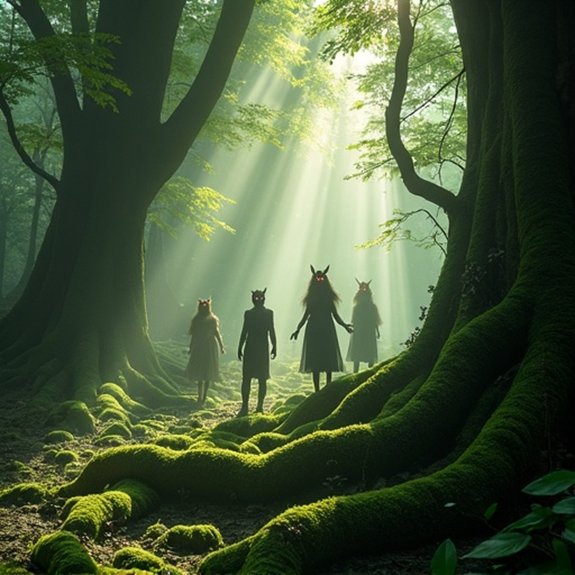
Three centuries of documented encounters with forest spirits span from medieval chronicles to modern eyewitness accounts, revealing consistent patterns across cultures and time periods. Japan’s Aokigahara Forest has generated numerous kodama sightings since the 1700s, with witnesses describing small luminous figures near ancient trees. Greece’s Mount Parnassus region recorded thirty-seven dryad encounters between 1650 and 1890, primarily involving shepherds who’d glimpsed feminine forms emerging from oak groves.
Modern cases include Brazil’s 2019 Curupira photographs from Amazonian researchers and Scotland’s documented tree spirit sightings in Caledonian pine forests. Witnesses consistently report similar phenomena: whispered warnings before natural disasters, protective interventions during logging operations, and ghostly figures that vanish when approached. These accounts share core elements despite geographical separation.
Common Theories or Explanations
Although skeptics attribute forest spirit encounters to psychological phenomena, researchers have proposed several competing explanations for these widespread sightings. Environmental scientists suggest electromagnetic fields from underground minerals might trigger hallucinations in sensitive individuals. They’ve documented unusual magnetic readings at multiple encounter sites.
Anthropologists favor the cultural memory hypothesis. They argue ancient peoples personified natural forces, creating enduring archetypes that persist in modern consciousness. When people enter forests, they’re primed to interpret ambiguous stimuli through these cultural lenses.
Quantum physicists propose interdimensional bleeding—brief overlaps between parallel realities where nature spirits exist. Meanwhile, biologists investigate whether unknown pheromones from rare fungi could induce shared visions among witnesses. Each theory attempts to bridge the gap between folklore and observable phenomena.
Frequently Asked Questions
How Do Different Cultures Depict Forest Spirits in Their Traditional Art?
Different cultures depict forest spirits uniquely in their art. Japanese artists paint kodama as white, ethereal figures in trees. Greek artisans sculpt dryads as beautiful women emerging from bark. Native Americans craft totems showing tree spirits.
What Offerings or Rituals Are Traditionally Used to Appease Forest Spirits?
People traditionally leave rice, sake, and coins for kodama at shrine trees. They’ll tie prayer papers to branches, while European traditions involve leaving bread, milk, or honey at tree roots for dryads’ protection.
Can Forest Spirits Be Dangerous or Harmful to Humans Who Encounter Them?
Yes, they’re often dangerous to those who disrespect their domain. Kodama curse woodcutters who fell sacred trees, while dryads lead trespassers astray until they’re hopelessly lost. Both punish forest desecration with illness or madness.
Are There Specific Trees or Forests More Likely to Harbor These Spirits?
Ancient forests and sacred groves commonly harbor these spirits. They’re particularly drawn to old-growth trees like oaks, cedars, and camphor trees. Untouched wilderness areas and places with strong spiritual significance attract more forest spirit activity.
What Role Do Forest Spirits Play in Modern Environmental Conservation Movements?
Forest spirits’ve become powerful symbols for environmental activists who invoke their mythology to inspire reverence for nature. They’re featured in conservation campaigns, educational materials, and protests, embodying the sacred relationship between humans and forests.

Mythical Birds: Thunderbirds, Garudas, Simurgh

The Myth of the Sun Chariot

The Grootslang: Mixed Beasts in Myth
About The Author
