The Lunar Goddess Myths of Asia
Across Asia’s vast landscapes, ancient civilizations have revered lunar goddesses for millennia, weaving their stories into the fabric of cultural identity. These deities don’t merely represent celestial bodies—they’ve shaped festivals, influenced agricultural practices, and guided spiritual beliefs. From China’s immortal Chang’e to Japan’s enigmatic Tsukuyomi, each goddess carries secrets about humanity’s relationship with the night sky. But what drives cultures separated by thousands of miles to share such strikingly similar lunar worship?
Introduction
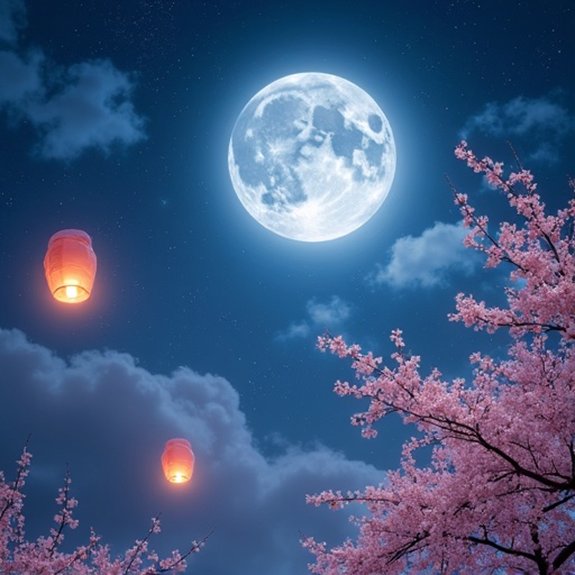
While Western cultures often associate the moon with masculine deities, Asia’s rich mythological traditions have long celebrated the moon as a divine feminine force. From China’s Chang’e to Japan’s Tsukuyomi-no-Mikoto’s feminine counterparts, lunar goddesses have shaped cultural festivals, folklore, and spiritual practices across the continent. These deities don’t just illuminate the night sky—they’ve influenced everything from harvest celebrations to romantic poetry.
Each goddess carries distinct stories that reflect her culture’s values. They’re protectors of women, guardians of immortality, and symbols of beauty and solitude. Their myths explain lunar phases, eclipses, and the moon’s connection to human emotions. Understanding these goddesses reveals how Asian societies have interpreted celestial phenomena through feminine divinity, creating narratives that still resonate in modern celebrations like the Mid-Autumn Festival and moon-viewing ceremonies.
Ancient Chinese Moon Worship
China’s relationship with lunar worship stretches back over 3,000 years, predating even the famous Chang’e myths that would later dominate the cultural landscape. Archaeological evidence from the Shang Dynasty reveals moon-shaped jade artifacts and oracle bones inscribed with lunar observations. Ancient Chinese astronomers tracked the moon’s phases meticulously, believing it controlled agricultural cycles and human fortune.
The moon represented yin energy—feminine, cool, and receptive—balancing the sun’s masculine yang force. Emperors performed elaborate moon ceremonies during autumn harvests, offering white silk and round pastries to guarantee prosperity. Common people couldn’t participate in royal rituals but developed their own traditions: burning incense under full moons, placing mirrors on rooftops to capture lunar essence, and timing marriages according to lunar calendars.
Notable Cases or Sightings
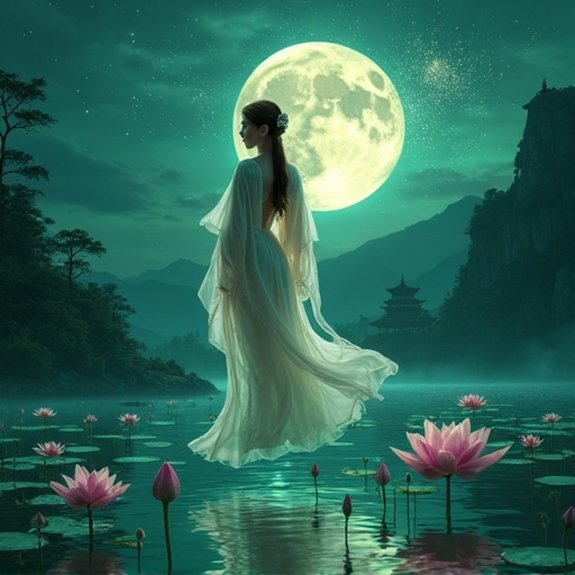
How did ancient lunar goddess worship transform from abstract reverence into documented encounters with divine manifestations? Historical texts reveal specific instances where devotees claimed direct contact with lunar deities. China’s Tang Dynasty chronicles describe Emperor Xuanzong‘s reported vision of Chang’e during a mid-autumn festival in 713 CE. He’d commissioned court astronomers to document unusual lunar phenomena coinciding with religious ceremonies.
Japan’s Heian period records contain multiple accounts of Tsukuyomi appearances near sacred shrines. Priests documented unexplained luminescent figures during full moon rituals. Korea’s Goryeo Dynasty archives mention Queen Wonseong‘s encounter with a moon goddess who allegedly provided prophetic dreams about military conflicts.
These sightings weren’t isolated incidents. They’ve shaped regional folklore, influenced architectural designs of moon-viewing pavilions, and established pilgrimage routes still used today.
Common Theories or Explanations
Although documented sightings of lunar goddesses span centuries, scholars have proposed several theories to explain these phenomena. Anthropologists suggest these visions stem from collective cultural memory, where ancient worship practices imprint themselves on communities’ psychological frameworks. They’ve identified patterns linking sightings to lunar festivals and agricultural cycles.
Psychologists favor mass hallucination theories, noting that most witnesses share similar religious backgrounds and expectations. Sleep deprivation during nighttime rituals may trigger shared visions. Meanwhile, astronomers propose atmospheric phenomena—unusual light refractions during specific lunar phases—create goddess-like projections.
Folklorists argue these sightings represent archetypal manifestations of feminine divine principles. They’ve traced consistent symbolic elements across different Asian cultures: flowing robes, crescents, and luminous auras. These theories don’t necessarily contradict each other but offer complementary perspectives on complex phenomena.
Frequently Asked Questions
How Do Modern Asian Communities Celebrate Lunar Goddess Festivals Today?
Modern Asian communities celebrate lunar goddess festivals through mooncake sharing, lantern displays, and family reunions. They’ll gather for outdoor moon-viewing parties, perform traditional dances, offer prayers at temples, and tell children ancient goddess stories.
What Offerings or Rituals Are Traditionally Performed for Lunar Goddesses?
Devotees traditionally offer mooncakes, fruits, and incense to lunar goddesses. They’ll perform moon-gazing rituals, light lanterns, and prepare tea ceremonies. Women often pray for beauty and love while families gather to share stories under moonlight.
How Do Lunar Goddess Myths Vary Between Different Asian Countries?
Asian lunar goddess myths differ considerably across cultures. China’s Chang’e lives alone on the moon after stealing immortality elixir, while Japan’s Tsukuyomi governs night domains. Southeast Asian traditions often depict moon goddesses controlling tides and fertility.
Are There Male Lunar Deities in Asian Mythology?
Yes, several Asian cultures feature male lunar deities. Japan’s Tsukuyomi rules the moon, while Hindu mythology includes Chandra, a male moon god. These figures contrast with the primarily female lunar deities found across Asia.
What Symbols and Animals Are Associated With Asian Lunar Goddesses?
Asian lunar goddesses are commonly associated with rabbits, particularly in Chinese and Japanese myths. They’re linked with jade, pearls, immortality elixirs, osmanthus flowers, and mooncakes. The moon rabbit pounds medicine while accompanying these celestial deities. The mythical significance of the moon rabbit extends beyond mere folklore; it symbolizes the themes of renewal and rebirth that accompany the changing cycles of the moon. In many cultures, the moon rabbit is also seen as a guide for travelers during the night, embodying wisdom and protection. As such, the tales of this enchanting figure continue to inspire art and literature across generations.
About The Author
