The Minotaur: Labyrinth Myths
The creature that’s haunted Western imagination for millennia isn’t just a monster with a bull’s head. Archaeological discoveries at Knossos have revealed surprising connections between the Minotaur myth and actual Minoan civilization. Ancient frescoes, labyrinthine palace corridors, and bull-leaping ceremonies suggest the legend emerged from real cultural practices. But what drove the Minoans to create such elaborate architectural mazes, and why did this particular myth survive when countless others vanished?
Introduction
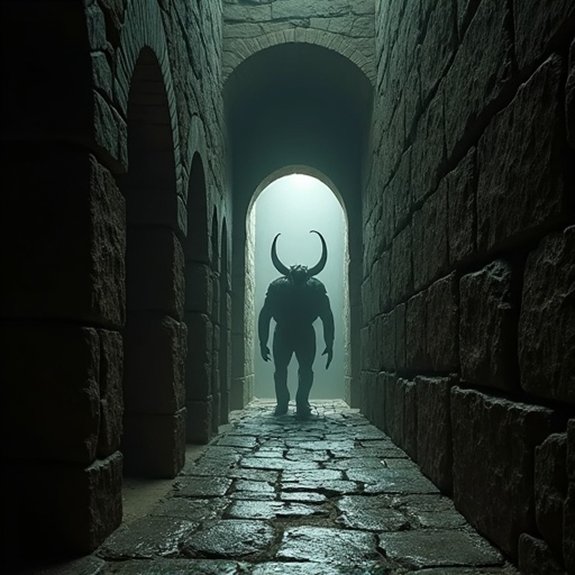
While ancient Greek mythology brims with fantastical creatures and divine conflicts, few tales have captured humanity’s imagination quite like the story of the Minotaur and its inescapable labyrinth. This enduring myth combines humanity’s deepest fears—monsters, imprisonment, and sacrifice—with themes of heroism and ingenuity. The tale’s originated in ancient Crete, where King Minos commissioned the craftsman Daedalus to build an elaborate maze beneath his palace. Within this labyrinth lived the Minotaur, a creature with a bull’s head and a man’s body, born from Queen Pasiphaë’s unnatural union with a sacred bull. The beast’s hunger for human flesh demanded regular tributes of Athenian youth until the hero Theseus ventured into the maze. His triumph over the monster became one of Greek mythology’s most celebrated victories.
Minoan Palace at Knossos
Archaeological excavations at Knossos have revealed Europe’s oldest throne room and a sprawling palace complex that may have inspired the labyrinth legend. Sir Arthur Evans uncovered the Bronze Age structure in 1900, finding over 1,300 interconnected rooms spread across five acres. The palace’s confusing layout features multiple levels, countless corridors, and dead-end passages that would’ve disoriented visitors.
Bull imagery dominates the site’s frescoes and architecture. Sacred bull-leaping ceremonies took place in the central courtyard, while bull horns crowned the palace’s walls. The Minoans’ bull worship and the palace’s maze-like design likely sparked Greek imagination. When mainland Greeks encountered Knossos’s ruins centuries after its destruction, they couldn’t comprehend such architectural complexity. The bewildering remains transformed into mythology’s most famous labyrinth, housing the bull-headed Minotaur.
Notable Cases or Sightings
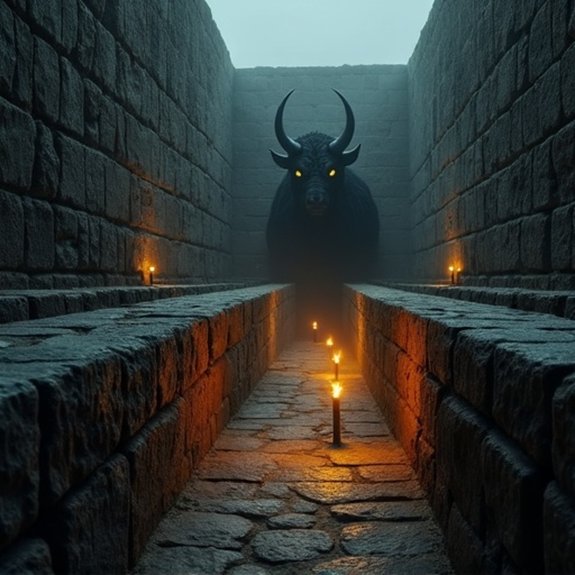
Though ancient Greek texts treat the Minotaur as pure myth, several classical authors claimed they’d discovered evidence of the creature’s existence. Pausanias wrote that he’d seen supposed Minotaur bones displayed in a temple near Marathon. The Roman historian Pliny described travelers’ accounts of bull-headed statues in Crete that locals insisted depicted the actual creature.
Medieval chroniclers added their own sightings. A 12th-century pilgrim reported hearing bellowing sounds from beneath Knossos’s ruins. Venetian merchants trading in Crete during the 1400s documented local stories about shepherds who’d glimpsed a massive horned figure near ancient cave systems. While modern archaeology hasn’t substantiated these claims, they’ve influenced how Western culture interprets Minoan bull imagery and the labyrinth‘s enduring mystique in literature and art.
Common Theories or Explanations
Since the Minotaur myth has captivated scholars for centuries, they’ve proposed numerous theories to explain its origins. Many historians believe the legend reflects Minoan bull-worship practices in ancient Crete, where bull-leaping rituals held religious significance. The labyrinth itself might’ve represented the complex palace at Knossos, whose intricate layout confused visitors.
Some researchers suggest the myth symbolized Athens’ historical tribute payments to Crete, transformed into a tale of human sacrifice. Others interpret the Minotaur as representing humanity’s struggle against primal instincts, with Theseus embodying rational thought conquering bestial nature.
Archaeological evidence points to actual bull cults and maze-like architectural structures throughout the Mediterranean. Modern psychologists view the labyrinth as a metaphor for the unconscious mind, where confronting one’s inner monster becomes necessary for personal growth.
Frequently Asked Questions
What Did the Minotaur Eat Besides the Athenian Tributes?
The Minotaur’s diet wasn’t limited to Athenian tributes. Ancient sources suggest he’d consume regular food provisions sent into the labyrinth, including meat, grain, and wine. Some myths claim he ate anyone who entered his maze.
How Was the Labyrinth Constructed and Who Designed It?
Daedalus, the master craftsman, designed and built the labyrinth beneath King Minos’s palace in Crete. He constructed the maze with countless winding passages and dead ends, making it impossible for anyone who entered to escape.
What Happened to the Minotaur’s Body After Theseus Killed It?
Ancient sources don’t detail what happened to the Minotaur’s body after Theseus killed it. Most myths focus on Theseus’s escape with Ariadne, leaving the creature’s corpse presumably abandoned in the labyrinth’s dark corridors.
Could the Minotaur Speak or Communicate With Humans?
Ancient sources don’t describe the Minotaur speaking. Most myths portray it as a savage beast that roared and devoured victims. Some modern interpretations imagine it possessed human intelligence but couldn’t communicate through conventional language.
Why Did King Minos Keep the Minotaur Instead of Killing It?
King Minos couldn’t kill the Minotaur because it was his wife’s son, born from her union with a sacred bull. He’d also feared divine punishment since the creature resulted from his defiance of Poseidon.

About The Author
