The Myth of the Sacred King
Throughout history, sacred kings‘ve wielded power that transcended mere political authority. These rulers didn’t just govern—they embodied the divine connection between heaven and earth. From Mesopotamian ziggurats to Celtic hillforts, societies entrusted their fate to monarchs who could allegedly control rainfall, guarantee harvests, and maintain cosmic balance. But the price of such power often proved deadly. The most disturbing aspect of sacred kingship remains hidden in ancient burial sites and cryptic ritual texts.
Introduction
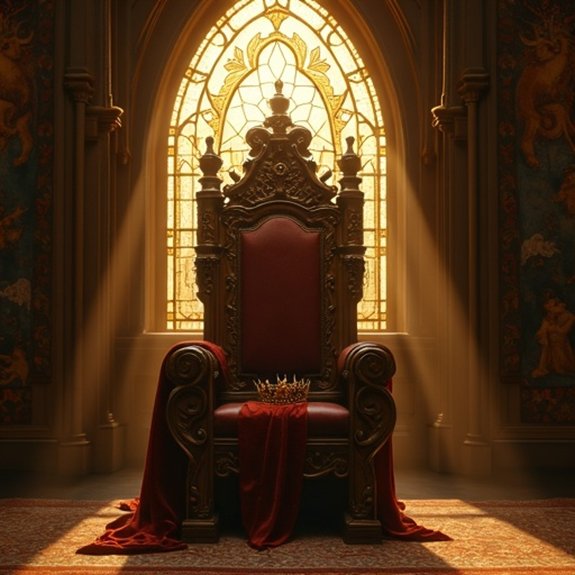
When ancient civilizations first emerged from the mists of prehistory, they shared a striking pattern: the figure of a divine or semi-divine ruler who served as the bridge between heaven and earth. From Egypt’s pharaohs to Japan’s emperors, from Mesopotamian priest-kings to Mayan ajaw, societies independently developed the concept of sacred kingship. These rulers weren’t merely political leaders; they embodied cosmic order itself. Their health mirrored the land’s fertility, their rituals guaranteed seasonal cycles, and their deaths threatened universal chaos. This archetype transcended geography and time, appearing in cultures that had no contact with one another. The sacred king myth reveals humanity’s deep need to connect earthly governance with divine authority, merging political power with religious legitimacy through a single, sanctified figure.
Ancient Mesopotamian Divine Kingship
The earliest recorded examples of sacred kingship emerged in ancient Mesopotamia, where rulers claimed divine appointment or descent from the gods themselves. Sumerian kings declared they’d received their authority directly from Enlil or Anu, the supreme deities. The concept of “divine radiance” or melammu supposedly surrounded these monarchs, marking them as chosen intermediaries between heaven and earth.
Mesopotamian rulers didn’t just govern; they performed essential religious duties that maintained cosmic order. They’d lead New Year festivals, conduct sacred marriages with priestesses representing Inanna, and oversee temple construction. The Epic of Gilgamesh illustrates this dual nature—Gilgamesh was two-thirds divine, one-third human. Later Akkadian and Babylonian kings continued these traditions, with Hammurabi claiming the god Marduk personally handed him his famous law code.
Notable Cases or Sightings
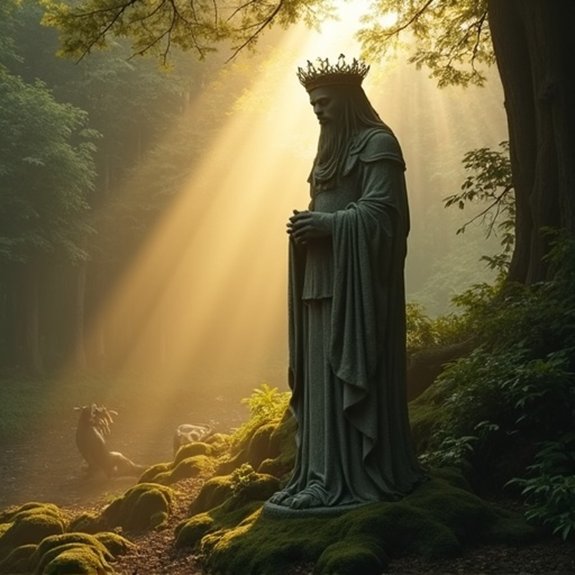
Throughout history, several monarchs have embodied the sacred king archetype with particular intensity, leaving behind archaeological evidence and historical accounts that demonstrate the widespread nature of this phenomenon. Egypt’s Amenhotep III proclaimed himself a living god, constructing massive temples that reinforced his divine status. In Japan, Emperor Hirohito‘s divinity remained official doctrine until 1946, when he publicly renounced his godhood after World War II.
Celtic mythology preserves accounts of ritual kingship through figures like Cormac mac Airt, whose reign supposedly brought supernatural prosperity to Ireland. Peru’s Inca rulers claimed direct descent from Inti, the sun god, maintaining elaborate ceremonies that reinforced their cosmic authority. These examples aren’t isolated curiosities but represent a global pattern where political power merged with religious authority, creating rulers who served as intermediaries between earthly and divine domains.
Common Theories or Explanations
While anthropologists have proposed numerous theories to explain the sacred king phenomenon, James Frazer’s “dying god” hypothesis remains the most influential framework for understanding these divine rulers. He argued that sacred kings embodied nature’s cycles, requiring ritual death and rebirth to guarantee fertility and cosmic order.
Contemporary scholars have expanded Frazer’s work through structuralist and psychological lenses. Claude Lévi-Strauss interpreted sacred kingship as mediating between opposing forces—nature and culture, chaos and order. Carl Jung viewed these myths as archetypal expressions of humanity’s collective unconscious, representing the self’s transformation.
Political theorists suggest practical motivations: divine authority legitimized power, unified diverse populations, and justified succession systems. René Girard’s scapegoat mechanism theory proposes that sacrificing sacred kings channeled societal violence, maintaining stability through controlled ritual crisis.
Frequently Asked Questions
How Did Sacred Kingship Beliefs Influence Modern Constitutional Monarchies?
Sacred kingship beliefs shaped constitutional monarchies by preserving the monarch’s symbolic divine authority while transferring actual power to elected officials. They’ve maintained ceremonial roles, national unity functions, and religious connections that echo ancient sacred traditions.
What Rituals Marked the Transition Between Sacred Kings and Their Successors?
Ancient cultures marked royal changes through coronation ceremonies, ritual combat, symbolic death-and-rebirth rites, and sacred marriages. Successors often underwent purification rituals, received divine regalia, and performed sacrifices to legitimize their authority and guarantee cosmic continuity.
How Do Indigenous Cultures Today Maintain Sacred Kingship Traditions?
Few indigenous cultures today maintain pure sacred kingship traditions. They’ve adapted ancient practices through constitutional monarchies, ceremonial roles, and spiritual leadership positions that blend traditional authority with modern governance, preserving cultural identity while acknowledging contemporary political realities.
What Archaeological Evidence Supports the Existence of Sacred King Burials?
Archaeologists’ve discovered elaborate royal tombs containing ritual objects, sacrificed attendants, and divine symbols. They’ve found evidence at Ur’s royal cemetery, Egyptian pyramids, and Mayan burial sites where kings’ graves included ceremonial regalia indicating sacred status.
How Did Sacred Kingship Concepts Spread Between Unconnected Ancient Civilizations?
Scholars believe sacred kingship concepts spread through trade routes, cultural diffusion, and parallel development. They’ve identified similar patterns emerging independently when societies faced comparable challenges, suggesting humanity’s shared psychological tendencies toward divine leadership models.

The World Tree / Axis Mundi Motif

The Secrets of the Oracle at Delphi

The Underworld Birds: Psychopomps
About The Author
