The Petals of Immortality: Flower Myths
Throughout history, flowers haven’t just decorated gardens—they’ve promised eternal life. Ancient civilizations wove elaborate myths around these delicate blooms, believing certain petals held divine power. From Egyptian priests who guarded sacred lotus rituals to medieval alchemists seeking immortal roses, humanity’s obsession with flower mythology reveals something profound about the human condition. But what drives this persistent belief that mere flowers could unfasten death’s door?
Introduction

Throughout history, flowers have captivated humanity’s imagination, inspiring countless myths and legends that weave through cultures worldwide. These delicate blooms haven’t merely decorated gardens and ceremonies; they’ve served as powerful symbols in stories that explain life’s mysteries, death’s inevitability, and love’s transformative power.
Ancient civilizations attributed divine origins to many flowers, believing gods created them as gifts or punishments for mortals. Greeks told tales of narcissus and hyacinth, while Eastern cultures revered the lotus and chrysanthemum. Each bloom carried specific meanings that transcended their physical beauty.
These floral myths don’t just entertain; they reveal humanity’s deepest fears, desires, and attempts to understand nature’s cycles. They’ve shaped religious practices, influenced art, and continue to inform modern symbolism in literature and daily life.
Ancient Egyptian Lotus Creation Myths
Among the most profound floral myths in human history, the ancient Egyptian lotus holds a unique position as the flower from which all existence emerged. The blue lotus, or Nymphaea caerulea, appeared in Egypt’s creation stories as the first life to rise from primordial waters. According to Heliopolitan theology, the sun god Ra emerged from this sacred bloom at dawn, bringing light to the universe.
The lotus’s daily cycle—closing at night and opening with sunrise—reinforced its connection to rebirth and eternal life. Egyptians believed the flower’s sweet fragrance gave life to the god Ra each morning. This myth influenced Egyptian art, architecture, and burial practices for millennia. Lotus motifs adorned temple columns, while priests used the flower in religious ceremonies to invoke creation’s power.
Notable Cases or Sightings
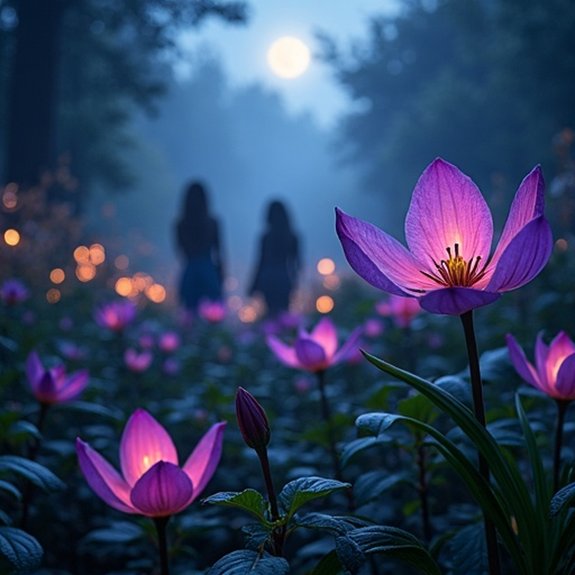
While ancient myths explained flowers’ cosmic significance, medieval Europe produced its own documented encounters with supposedly supernatural blooms. In 1347, French monk Brother Aldric recorded witnessing a crimson rose that wouldn’t wilt despite being plucked months earlier. He claimed it bled when cut and healed wounded pilgrims at Mont-Saint-Michel.
Bavaria’s Chronicle of Miracles describes the 1502 appearance of glowing white lilies in a burned forest near Munich. Witnesses reported the flowers emitted music and vanished at dawn. Similar accounts emerged from Scotland’s Hebrides, where fishermen spoke of sea roses that bloomed underwater during full moons.
The Vatican’s archives contain testimonies about the Flower of St. Brigid—a golden bloom that allegedly appeared in Irish convents during plagues, its petals curing the sick who touched them.
Common Theories or Explanations
As skeptics and scholars have examined these miraculous flower accounts, they’ve proposed several natural explanations for the phenomena. Botanists suggest that certain rare blooms contain psychoactive compounds that trigger hallucinations when inhaled, creating false memories of healing or transformation. They’ve identified alkaloids in ancient specimens that match descriptions from historical texts.
Anthropologists argue these myths serve social functions—reinforcing cultural values about death, renewal, and nature’s power. The stories often emerge during periods of plague or war, offering hope through symbolic narratives.
Medical historians point to the placebo effect and misdiagnosed conditions that naturally resolved. They’ve documented cases where “miracle flowers” coincided with seasonal recovery patterns. Additionally, some theorists propose that bioluminescent fungi or phosphorescent plants explain reports of glowing immortal blooms, particularly in damp cave environments where witnesses claimed discoveries.
Frequently Asked Questions
Which Flowers Are Traditionally Associated With Death and Rebirth in Different Cultures?
Various cultures associate lilies with death and rebirth, while Egyptians revered lotus flowers for regeneration. Christians link Easter lilies to resurrection, Japanese honor chrysanthemums for mourning, and Mexicans use marigolds to guide spirits home.
How Do Modern Botanical Discoveries Relate to Ancient Flower Immortality Myths?
Modern botanists’ve discovered that certain flowers contain compounds with regenerative properties, validating ancient myths. Scientists found lotus seeds remain viable for centuries, while resurrection plants survive extreme dehydration, mirroring immortality stories cultures’ve told for millennia.
What Specific Rituals Involve Immortality Flowers in Contemporary Spiritual Practices?
Contemporary practitioners use lotus flowers in Buddhist meditation ceremonies, burn white chrysanthemum incense during ancestor veneration, create amaranth wreaths for Samhain rituals, and place marigolds on Day of the Dead altars. They’re seeking spiritual transcendence.
Are There Any Toxic Flowers Historically Believed to Grant Eternal Life?
Yes, ancient alchemists believed mercury-containing cinnabar flowers and toxic foxglove could grant immortality. Chinese emperors consumed jade powder mixed with poisonous mercury sulfide blooms, while European mystics thought deadly nightshade’s berries promised eternal life.
Which Literary Works Feature Prominent Flower Immortality Symbolism and Themes?
Literary works featuring flower immortality symbolism include Oscar Wilde’s “The Picture of Dorian Gray” with its eternal roses, Tennyson’s lotus-eaters poems, and “The Epic of Gilgamesh” where the hero seeks immortality through a magical plant that’s ultimately lost.

The Chthonic Deities of the Underworld

The Grootslang: Mixed Beasts in Myth

The Underworld Journeys in World Mythology
About The Author
