The Sacred Trees: Yggdrasil, Kalpavriksha
Sacred trees have anchored humanity’s deepest beliefs about the cosmos for millennia. Yggdrasil‘s mighty branches connect Norse domains while Kalpavriksha grants wishes in Hindu-Buddhist traditions. These aren’t mere myths—they’ve shaped spiritual practices, influenced architecture, and sparked debates among scholars. Ancient texts describe them with startling consistency across cultures separated by thousands of miles. What these trees reveal about human consciousness and our place in the universe challenges conventional understanding.
Introduction
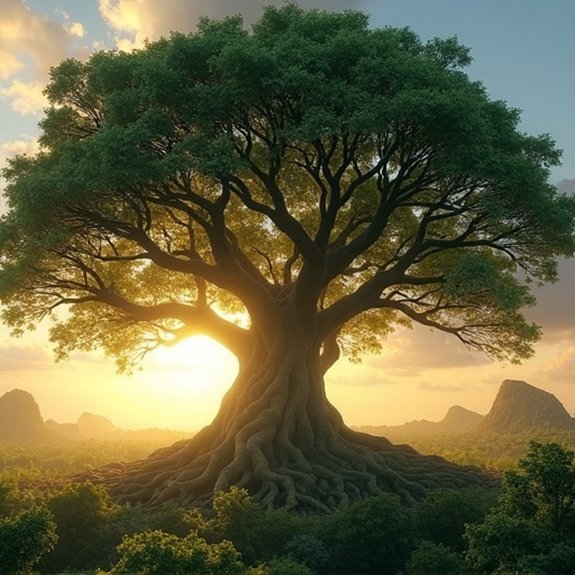
While many cultures have revered trees as symbols of life and wisdom, few sacred trees hold as much cosmic significance as Yggdrasil from Norse mythology and Kalpavriksha from Hindu-Buddhist traditions. These mythical trees don’t merely represent nature’s power—they embody the universe’s structure itself. Yggdrasil connects the Nine Worlds through its massive roots and branches, serving as the cosmic axis where gods, humans, and creatures interact. Similarly, Kalpavriksha grants wishes and sustains divine domains, bridging earthly desires with celestial abundance. Both trees appear in their cultures’ oldest texts and continue shaping modern spiritual practices. They’ve inspired art, literature, and philosophy across millennia. Understanding these sacred trees reveals how ancient peoples conceptualized reality’s interconnectedness and humanity’s place within the cosmic order.
Ancient Texts Describe Cosmic Trees
Although sacred trees appear throughout world mythology, the oldest surviving texts about Yggdrasil and Kalpavriksha provide remarkably detailed cosmic geographies. Norse sources like the Prose Edda and Poetic Edda describe Yggdrasil as an immense ash tree connecting nine worlds through its roots and branches. The tree’s three roots extend to different domains: Asgard, Jotunheim, and Helheim. Meanwhile, Hindu and Buddhist scriptures present Kalpavriksha as a wish-fulfilling tree that emerged during the churning of the cosmic ocean. The Puranas place it in Indra’s paradise, while Jain texts describe multiple Kalpavrikshas serving different purposes. Both traditions portray these trees as central pillars maintaining cosmic order. They’re not merely symbolic but function as living architectural elements that sustain universal structure and divine domains.
Notable Cases or Sightings
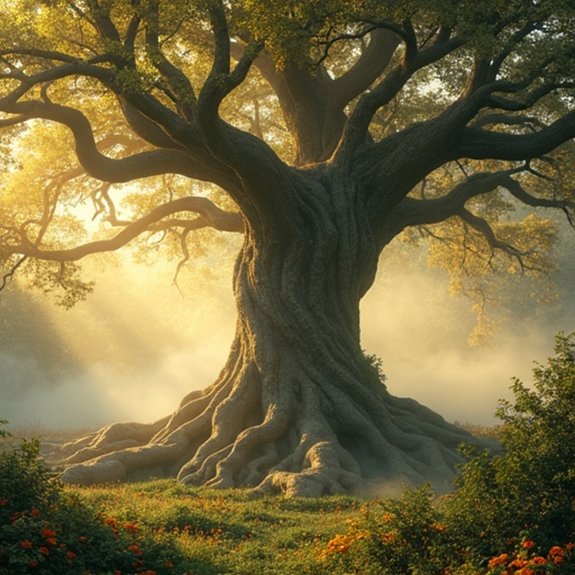
These ancient descriptions have sparked centuries of speculation about whether physical counterparts to these mythological trees might exist. In Iceland, locals’ve long identified an ancient ash tree near Uppåkra as a potential inspiration for Yggdrasil. Archaeological excavations there’ve revealed ritualistic deposits spanning over a millennium, suggesting the site’s sacred significance.
India’s witnessed numerous claims regarding Kalpavriksha’s location. The parijat tree in Uttar Pradesh’s Kintoor village attracts thousands who believe it’s the wish-fulfilling tree from Hindu scriptures. Its unusual flowering pattern—blooming only at night with flowers falling before dawn—reinforces believers’ convictions.
Mount Kailash’s surroundings in Tibet contain several trees that pilgrims’ve identified as manifestations of these cosmic trees. While scientists explain these as ordinary specimens, devotees report experiencing profound spiritual phenomena near them.
Common Theories or Explanations
When scholars examine the universal presence of cosmic trees across unconnected cultures, they’ve proposed several compelling explanations for this phenomenon. Carl Jung’s theory of collective unconscious suggests these myths arise from shared archetypal patterns in human psychology. The tree’s vertical structure naturally represents the three-tiered cosmos: roots penetrating the underworld, trunk occupying the middle world, and branches reaching heaven.
Anthropologists argue that early societies observed trees’ life cycles—seasonal death and rebirth—and projected cosmic significance onto them. Trees provided shelter, food, and materials, making them logical symbols of abundance and divine provision. Some researchers propose that shamanic practices involving tree climbing during altered states created consistent mythological frameworks. Others suggest astronomical observations linked celestial movements to tree imagery, with branches representing constellations and the trunk symbolizing the world axis.
Frequently Asked Questions
Are There Any Modern Religious Rituals or Ceremonies Involving These Sacred Trees?
Modern Norse pagans honor Yggdrasil through meditation and ritual offerings at oak trees. Hindu devotees perform puja ceremonies beneath banyan trees representing Kalpavriksha, offering flowers, incense, and prayers while circumambulating the trunk during festivals.
How Do Contemporary Artists Depict Yggdrasil and Kalpavriksha in Their Works?
Contemporary artists depict Yggdrasil as cosmic networks with glowing branches connecting domains, while they portray Kalpavriksha with jeweled leaves and golden fruits. They’ve created digital installations, fantasy illustrations, tattoo designs, and sculptural interpretations blending traditional symbolism with modern aesthetics.
Can You Visit Any Physical Locations Associated With These Mythological Trees Today?
Travelers can’t visit actual mythological trees, but they’ll find symbolic representations at Uppsala’s reconstructed temple in Sweden, India’s ancient banyan trees like Jyotisar in Kurukshetra, and various Hindu temples featuring carved or painted Kalpavriksha depictions.
What Plants or Tree Species Are Botanically Linked to These Myths?
Scholars link Yggdrasil to the European ash tree (Fraxinus excelsior), while they’ve connected Kalpavriksha to various species including the banyan (Ficus benghalensis), coconut palm, and wish-fulfilling trees like Madhuca longifolia in different regional traditions.
How Do These Sacred Trees Compare to Similar Concepts in Other Cultures?
These sacred trees parallel many cultures’ cosmic trees: China’s Jianmu connects heaven and earth, Mesoamerica’s Ceiba supports the sky, and Siberian shamans’ world trees enable spirit travel. They’re universal symbols linking domains and providing abundance.

About The Author
