The Underworld of the Aztecs
The Aztec underworld isn’t what most people expect. While other cultures imagined simple divisions between paradise and punishment, Mictlan’s nine treacherous levels sent souls on journeys determined by how they’d died, not how they’d lived. Warriors who fell in battle avoided it entirely. Those who drowned went elsewhere. But for everyone else, a four-year descent through supernatural trials awaited, ending at the feet of a skeletal god whose true purpose remains disputed.
Introduction
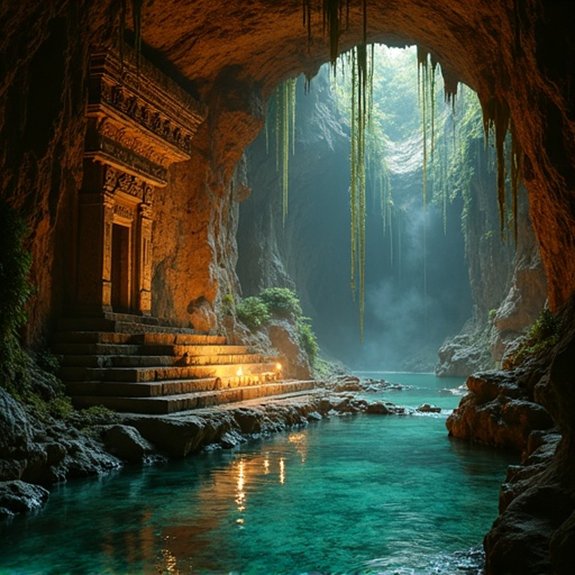
When Spanish conquistadors first encountered the Aztec Empire in the early 16th century, they couldn’t fully grasp the sophisticated spiritual beliefs that governed every aspect of Mesoamerican life. The Aztec underworld, known as Mictlan, represented far more than a simple afterlife destination. It served as a complex nine-level dimension where most souls journeyed after death, facing trials that’d test their resolve for four years.
Unlike European concepts of heaven and hell, Mictlan didn’t divide souls based on moral conduct. Instead, one’s manner of death determined their afterlife destination. Warriors who died in battle and women who died in childbirth went to different dimensions entirely. This intricate belief system shaped Aztec attitudes toward death, transforming it from an ending into a continuation of existence.
Mictlan’s Nine-Level Journey Structure
The soul’s descent through Mictlan began at Itzcuintlan, the Place of Dogs, where a deceased person needed a canine companion to cross the treacherous Chicunauhyo River. This first level marked the start of a four-year journey through increasingly dangerous domains.
The subsequent levels tested the soul’s endurance through specific trials. At Tepeme Monamictlan, mountains crashed together, threatening to crush travelers. The third level’s obsidian winds cut like knives, while the fourth level’s icy gales froze the unprepared. Pancuetlacaloyan featured flying arrows that pierced wandering souls.
The sixth through eighth levels brought jaguars that devoured hearts, rivers of blood, and narrow passages between stones. Finally, at Chicuhnauhmictlan, the ninth level, souls met Mictlantecuhtli, the death lord who’d determine their eternal fate in his vast underworld kingdom.
Notable Cases or Sightings
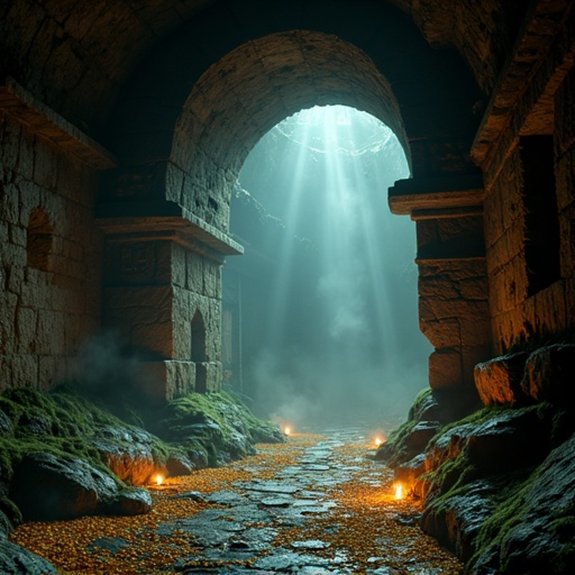
While Spanish conquistadors documented numerous indigenous accounts of Mictlan encounters, the most compelling evidence comes from pre-Columbian codices and oral traditions preserved by Nahua communities. The Codex Borgia depicts priests who’d allegedly traveled to Mictlan through ritual death, returning with prophecies from Mictlantecuhtli. Bernardino de Sahagún recorded testimonies of shamans claiming they’d witnessed souls crossing the Chicunauhyo River during trance states.
The most famous account involves Nezahualcoyotl, the poet-king of Texcoco, who reportedly experienced visions of Mictlan’s bone-filled plains after consuming sacred mushrooms. Local folklore tells of caves near Teotihuacan where villagers heard voices of the dead speaking through underground passages. Modern archaeologists’ve discovered burial sites with offerings specifically arranged to match descriptions from these supposed Mictlan journeys, suggesting witnesses influenced funeral practices.
Common Theories or Explanations
Beyond these documented encounters, scholars’ve proposed various interpretations for Mictlan‘s persistent presence in Mesoamerican consciousness. Anthropologists suggest the underworld represents collective trauma from Spanish colonization, manifesting as shared cultural memory. They argue that Mictlan stories preserve pre-Columbian worldviews that couldn’t survive openly under Catholic rule.
Psychologists offer another perspective. They believe Mictlan functions as a psychological archetype, helping communities process death and grief. The nine-level journey mirrors stages of mourning, while Xochitonal’s flowery paradise provides comfort for those who’ve lost children.
Archaeological evidence supports a third theory. Researchers’ve discovered extensive cave systems beneath Teotihuacan that match ancient descriptions of underworld entrances. These natural formations likely inspired Mictlan’s geography, with underground rivers and chambers reinforcing beliefs about subterranean death domains.
Frequently Asked Questions
What Offerings Did Aztecs Place in Tombs for the Deceased’s Journey?
The Aztecs placed jade beads, obsidian knives, pottery vessels with food and water, clothing, and personal belongings in tombs. They’d include a dog’s remains to guide the deceased through Mictlan’s nine treacherous levels.
How Did Spanish Colonization Affect Traditional Aztec Underworld Beliefs and Practices?
Spanish colonization forcibly replaced Aztec underworld beliefs with Christian concepts of heaven and hell. Missionaries banned traditional burial practices, destroyed codices documenting Mictlan’s journey, and they’ve syncretized some indigenous elements into Catholic death rituals.
Which Specific Gods and Goddesses Ruled Different Regions of Mictlan?
Mictlantecuhtli and his wife Mictlancihuatl ruled Mictlan’s ninth level. While they’re the primary deities, other gods like Xochitonal governed specific regions. Each level didn’t have distinct rulers but fell under Mictlantecuhtli’s overall dominion.
What Rituals Did Aztec Priests Perform to Communicate With the Dead?
Aztec priests performed bloodletting ceremonies, burned copal incense, and offered food and precious objects at altars. They’d chant sacred prayers during Miccailhuitontli festivals and use hallucinogenic substances to enter trance states for spiritual communication.
How Does Mictlan Compare to Underworld Concepts in Neighboring Mesoamerican Cultures?
Mictlan shares Mesoamerica’s nine-level underworld structure with Maya’s Xibalba, but it’s less antagonistic. While Maya souls face trials from malevolent lords, Aztec souls endure natural obstacles. Both cultures required burial goods for the journey.

About The Author
