The Wind God Across Cultures
Throughout history, civilizations haven’t just observed the wind—they’ve given it names, faces, and temples. From Mesopotamian ziggurats to Egyptian pyramids, ancient peoples transformed invisible air currents into powerful deities who could destroy fleets or bring life-giving rain. These wind gods weren’t mere mythology. They represented something deeper: humanity’s first attempts to understand atmospheric forces that determined whether crops flourished or cities fell. What drove this universal need to personify the wind?
Introduction
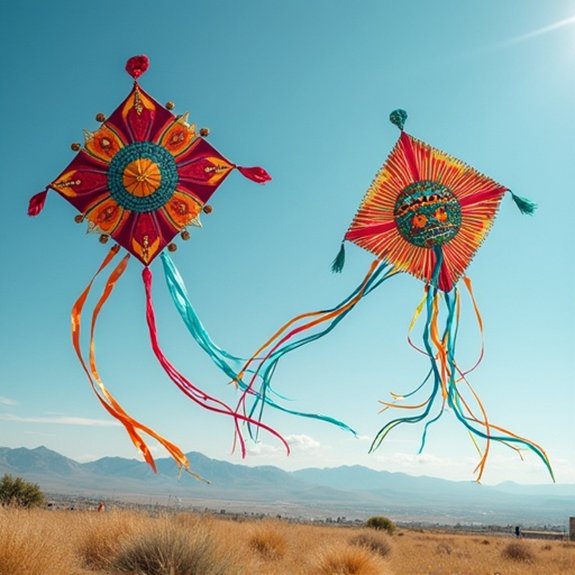
While ancient civilizations separated by vast oceans and continents had no way to communicate with each other, they’ve all created remarkably similar deities to explain and control the wind. These wind gods weren’t merely mythological figures; they represented humanity’s attempt to understand atmospheric forces that shaped daily life. From Greece’s Aeolus to Japan’s Fūjin, from the Aztec Ehecatl to the Hindu Vayu, each culture developed complex narratives around these powerful beings.
Wind deities typically controlled navigation, agriculture, and weather patterns. Sailors prayed to them for favorable voyages, while farmers sought their blessing for gentle breezes during harvest. These gods often possessed dual natures—bringing both life-giving winds and destructive storms. Their worship reveals how ancient peoples recognized wind’s essential role in sustaining civilizations through trade, rainfall, and climate regulation.
Ancient Mesopotamian Storm Deities
As one of humanity’s earliest civilizations emerged between the Tigris and Euphrates rivers, the Mesopotamians developed a pantheon where storm deities held supreme power. Enlil, the Sumerian god of wind and storms, ruled as king of the gods from his temple in Nippur. He controlled the air between heaven and earth, decreeing fates and bringing both destructive tempests and life-giving rains.
The Akkadians later adopted Enlil while elevating Adad as their primary storm god. Adad’s thunderous voice shook mountains, and his lightning bolts served as divine weapons. Assyrians and Babylonians continued venerating these deities, depicting them with bulls—symbols of strength—and lightning in their hands. These gods weren’t merely weather controllers; they represented kingship, justice, and cosmic order throughout Mesopotamian history.
Notable Cases or Sightings

When ancient chroniclers documented encounters with wind deities, they often described phenomena that modern readers might recognize as severe weather events. The Babylonian epic of Gilgamesh recounts how Enlil’s breath devastated Uruk with hurricane-force winds. Egyptian priests recorded Amun-Ra’s manifestation as a sandstorm that halted Persian armies in 525 BCE.
Greek historians wrote of sailors who’d witnessed Aeolus’s appearance near the Lipari Islands, where sudden gales capsized vessels. Roman texts describe augurs interpreting dust devils as messages from Ventus. In 79 CE, Pliny the Elder attributed Vesuvius’s deadly pyroclastic flows to Vulturnus’s wrath.
These accounts weren’t mere mythology to their authors. They represented genuine attempts to explain natural disasters through divine intervention, creating a historical record of extreme weather interpreted through religious frameworks.
Common Theories or Explanations
Although meteorological science has largely replaced divine explanations for wind phenomena, several theories attempt to explain why wind deities appeared so consistently across unconnected cultures. Anthropologists suggest that wind’s invisible yet powerful nature made it seem supernatural to early humans. The force that could destroy crops, propel ships, or bring rain demanded explanation beyond simple observation.
Psychological theories propose that humans naturally personify uncontrollable forces to cope with vulnerability. By naming and worshipping wind gods, societies felt they’d gained some influence over unpredictable weather patterns. Additionally, wind’s connection to breath—literally “the breath of life“—made it symbolically linked to souls and spirits across cultures. Some scholars argue that trade routes spread these beliefs, while others maintain they developed independently through parallel human experiences with nature’s power.
Frequently Asked Questions
How Do Modern Religions Incorporate Wind God Symbolism in Their Practices?
Modern religions incorporate wind symbolism through prayer flags in Buddhism, invoking the Holy Spirit as divine breath in Christianity, and ritual wind ceremonies in indigenous practices. They’ll use wind for purification, carrying prayers, and representing divine presence.
What Rituals or Offerings Were Traditionally Made to Appease Wind Deities?
Ancient peoples offered incense, prayers, and sacrificial animals to wind deities. They’d perform ritual dances, hang prayer flags, and present food offerings at mountaintop shrines. Sailors frequently threw coins into the sea before voyages.
How Are Wind Gods Depicted in Contemporary Art and Literature?
Contemporary artists and writers often portray wind gods as environmental forces confronting climate change. They’re reimagined as both destroyers and protectors, appearing in graphic novels, fantasy literature, and installations that blend ancient mythology with modern ecological concerns.
Which Cultures View Wind Deities as Benevolent Versus Destructive Forces?
Japanese and Greek cultures often depict wind deities as benevolent guides and messengers, while Caribbean and Pacific Islander traditions frequently portray them as destructive hurricane gods. Native American cultures typically show wind spirits as both creative and chaotic forces.
What Archaeological Evidence Exists of Wind God Worship Sites?
Archaeologists’ve discovered wind deity temples at Teotihuacan’s Quetzalcoatl pyramid, Greek mountaintop sanctuaries for Aeolus, and Mesopotamian ziggurats with wind god inscriptions. They’ve found ritual objects, wind-bells, and carved reliefs depicting atmospheric deities at these sites.

The Underworld Rivers: Styx, Lethe, Etc

The Pillars of Hercules & Myth

The Moirai / Norns: Fate Weavers
About The Author
