Ghosts in the Vatican Tunnels
Beneath Vatican City’s sacred grounds, maintenance workers and Swiss Guards have reported encounters they can’t explain. They’ve heard disembodied voices echoing through ancient passageways and witnessed shadowy figures that vanish when approached. These tunnels, built atop Roman burial grounds, harbor centuries of history—and perhaps something more. While the Vatican remains silent on these accounts, the testimonies continue to emerge from those who work in the darkness below.
Introduction
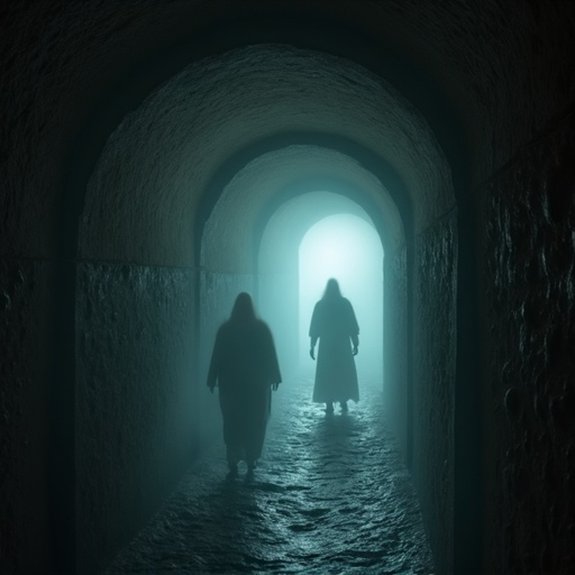
While the Vatican’s grand basilicas and ornate chapels draw millions of visitors each year, a hidden world exists beneath the holy city’s marble floors—a vast network of ancient tunnels where countless souls have reportedly wandered for centuries. These subterranean passages, dating back to Roman times,’ve served various purposes throughout history—from early Christian burial sites to secret escape routes for endangered popes. Guards, clergy members, and maintenance workers’ve reported unexplained phenomena in these shadowy corridors: disembodied voices echoing through stone chambers, mysterious footsteps following visitors, and apparitions of long-dead religious figures. The Vatican’s official stance remains silent on these supernatural claims, yet the stories persist. Modern investigators can’t access most areas due to security restrictions, leaving the tunnels’ ghostly reputation largely unchallenged and perpetually shrouded in mystery.
Ancient Roman Burial Grounds
Before Constantine legalized Christianity in 313 CE, Roman law prohibited burials within city walls, forcing early Christians to create extensive underground cemeteries beyond Rome’s boundaries. These catacombs stretched for miles beneath Rome’s outskirts, housing thousands of bodies in narrow galleries carved from volcanic rock. Christians preferred burial over cremation, believing in bodily resurrection.
Vatican Hill wasn’t originally within Rome’s walls. Romans had used the area for burials since the first century, creating a vast necropolis. When Constantine built St. Peter’s Basilica directly over Peter’s tomb, he didn’t demolish the surrounding pagan mausoleums. Instead, workers filled them with earth, preserving an entire cemetery beneath the church’s foundation. Today’s Vatican sits atop layers of ancient graves, where pagan and Christian dead lie together in darkness.
Notable Cases or Sightings
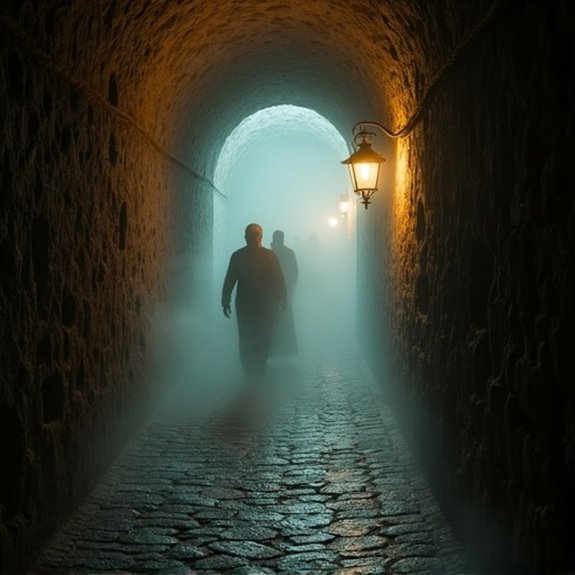
Swiss Guards stationed at night posts have reported unexplained footsteps echoing through the Passetto di Borgo, the fortified corridor connecting Vatican City to Castel Sant’Angelo. In 2019, two guards documented hearing Latin chanting near the Scavi excavations beneath St. Peter’s Basilica, though they found nobody present.
Vatican archivists working late have encountered cold spots and witnessed books falling from shelves in the Secret Archives’ underground sections. Three separate incidents in 2017 involved staff members seeing a robed figure disappearing around corners in the necropolis tunnels.
Maintenance workers’ve reported malfunctioning equipment and unexplained power outages specifically in areas above ancient burial sites. Security cameras have captured orbs and shadowy movements that technicians can’t explain through conventional means. These documented cases remain officially unacknowledged by Vatican authorities.
Common Theories or Explanations
Though Vatican officials maintain silence on these phenomena, paranormal researchers have proposed several explanations for the tunnel hauntings. Some investigators attribute the manifestations to residual energy from centuries of religious ceremonies and emotional prayers concentrated in the confined spaces. They’ve theorized that limestone walls beneath the Vatican act as natural recording devices, capturing and replaying traumatic events.
Others suggest the sightings result from electromagnetic fields generated by underground water systems and electrical wiring. These fields could trigger hallucinations or temporal lobe disturbances in sensitive individuals. Skeptics argue that oxygen deprivation in poorly ventilated tunnels causes disorientation and visual distortions. Meanwhile, believers claim the spirits are souls seeking absolution or guards eternally bound to protect sacred relics hidden within the catacombs.
Frequently Asked Questions
Can Tourists Visit the Vatican Tunnels Where Ghost Sightings Occur?
Tourists can’t access most Vatican tunnels where ghost sightings reportedly occur. They’re restricted areas beneath St. Peter’s Basilica and the Vatican. Visitors can only explore the Scavi necropolis through special guided tours with advance reservations.
What Safety Equipment Do Vatican Workers Use When Entering Haunted Tunnel Areas?
Vatican workers don’t use special safety equipment for supernatural concerns when entering tunnels. They’ll carry standard gear like flashlights, hard hats, and communication devices for practical hazards, but there’s no official protocol for ghost encounters.
Has the Vatican Officially Commented on Paranormal Activity in the Tunnels?
The Vatican hasn’t officially acknowledged paranormal activity in its tunnels. Church officials typically don’t comment on ghost sightings reported by workers or visitors, maintaining silence on supernatural claims while focusing on the sites’ religious significance.
Are Exorcisms Performed in Areas With Reported Ghost Sightings?
The Vatican doesn’t publicly confirm performing exorcisms in tunnel areas with ghost reports. While the Church conducts exorcisms for demonic possession cases, they’re typically reserved for people, not locations, following strict canonical guidelines.
Which Specific Tunnel Sections Have the Most Paranormal Reports?
The Vatican’s reportedly denied specific locations, but paranormal investigators claim the northeastern passages beneath the Apostolic Palace show highest activity. They’ve documented unexplained phenomena near the ancient Roman necropolis sections and medieval crypts below.
Haunted Mines of Cornwall

What Do Cattle Mutilations Really Mean?

Haunted Theatres: Ghosts Behind the Curtain
About The Author
