Haunted Islands: Isolated Ghostly Places
Scattered across the world’s oceans, certain islands harbor more than just wildlife and vegetation. They’ve become repositories for centuries of human tragedy, where isolation amplifies every unexplained sound and shadow. From Poveglia’s plague-riddled shores to Hashima’s abandoned concrete structures, these locations defy rational explanation. What transforms these remote landmasses into supernatural hotspots? The answer lies somewhere between documented disasters and the human mind’s response to complete isolation.
Introduction

Why do certain islands captivate the human imagination with tales of ghosts, curses, and unexplained phenomena? Islands possess an inherent mystique that’s amplified by their isolation from mainland civilization. They’re natural boundaries where the ordinary world ends and something else begins. Throughout history, islands have served as prisons, quarantine stations, battlegrounds, and burial sites—each function leaving behind tragic stories and restless spirits.
The surrounding water creates both physical and psychological barriers that trap energy, memories, and perhaps something more. Visitors can’t easily escape these confined spaces where past and present collide. From Italy’s plague-ridden Poveglia to Japan’s abandoned Hashima Island, these locations share common threads: isolation, tragedy, and abandonment. Their remoteness preserves not just crumbling structures but also the weight of human suffering that seems to permeate the very ground.
Ancient Maritime Disasters Spawned Legends
The isolation that makes islands perfect vessels for tragedy also made them deadly obstacles for ancient seafarers traversing treacherous waters. Ships carrying precious cargo and hundreds of souls would smash against hidden reefs during storms, leaving no survivors to tell their tales. These disasters birthed enduring ghost stories that sailors still whisper about today.
The Mediterranean’s rocky outcrops claimed countless Roman vessels, while Pacific atolls became graveyards for Chinese treasure fleets. Locals reported seeing phantom ships sailing through fog, their crews forever attempting to complete their final voyage. Islands near these wrecks developed reputations as cursed places where compasses spin wildly and modern vessels’ instruments fail. Archaeological evidence confirms many legendary disasters actually occurred, lending credibility to the supernatural stories that followed.
Notable Cases or Sightings
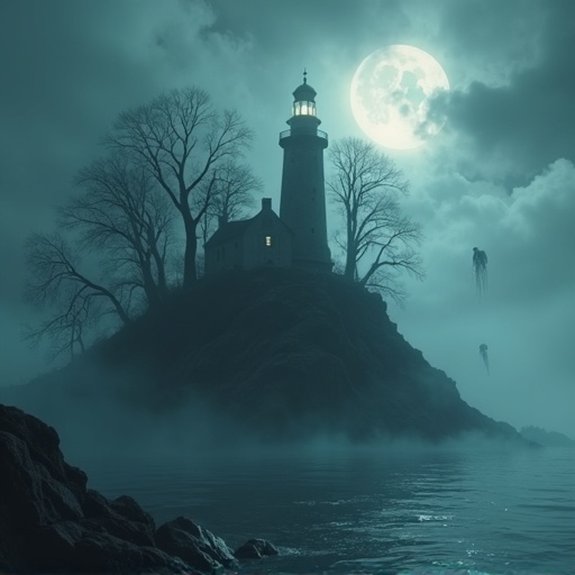
While maritime disasters created the foundation for island ghost stories, specific documented encounters have transformed certain locations into paranormal hotspots that investigators can’t ignore. Italy’s Poveglia Island tops most lists after nurses reported seeing plague victims’ spirits wandering abandoned hospital corridors in the 1960s. Multiple witnesses have photographed unexplained figures at Scotland’s Flannan Isles lighthouse, where three keepers vanished in 1900.
Japan’s Hashima Island attracts paranormal researchers who’ve recorded voices in empty apartment blocks where forced laborers died during WWII. Norfolk Island’s prison ruins generate consistent reports of apparitions matching executed convicts’ descriptions. Chile’s Robinson Crusoe Island produces electromagnetic anomalies near shipwreck sites that researchers can’t explain. These locations share common traits: violent deaths, isolation, and witness accounts spanning decades that’ve withstood scrutiny.
Common Theories or Explanations
Because islands trap both energy and memory according to paranormal theorists, they’ve developed several explanations for why these locations generate more ghost sightings than mainland areas. The isolation theory suggests that spirits can’t cross water, remaining bound to their island death sites. Maritime disasters create concentrated trauma in confined spaces, potentially imprinting emotional energy onto the landscape.
Environmental factors offer scientific alternatives. Islands experience unique electromagnetic fields from surrounding saltwater, which some researchers believe trigger hallucinations or altered mental states. The infrasound hypothesis proposes that ocean waves generate low-frequency vibrations that cause anxiety and visual distortions in visitors. Isolation itself affects psychology—limited human contact and unfamiliar surroundings heighten suggestibility. Historical preservation on islands means older buildings remain intact, reinforcing ghost stories through atmospheric settings that mainland locations have demolished.
Frequently Asked Questions
Can Tourists Visit These Haunted Islands, and Do They Require Special Permits?
Tourists can visit many haunted islands, though they’ll often need special permits or guided tours. Some locations require government authorization, while others restrict access entirely. Each island’s regulations vary based on ownership and safety concerns.
What Equipment Do Paranormal Investigators Typically Use When Exploring Haunted Islands?
Paranormal investigators typically bring EMF detectors, digital voice recorders, infrared cameras, and motion sensors to haunted islands. They’ll also pack temperature gauges, night vision equipment, and protective gear since these remote locations often lack basic amenities.
Are There Any Documented Cases of People Living Permanently on Haunted Islands?
Yes, several documented cases exist. Poveglia Island’s caretakers’ve lived there despite its haunted reputation. Ireland’s Spike Island has permanent residents who’ve reported paranormal experiences. Some lighthouse keepers on Michigan’s South Manitou Island stayed year-round.
Which Haunted Island Is Considered the Most Dangerous to Visit?
Poveglia Island in Italy’s considered the most dangerous haunted island to visit. Authorities’ve banned public access due to crumbling plague hospital ruins, unstable structures, and asbestos contamination. The government strictly enforces trespassing laws there.
Do Local Governments Officially Acknowledge the Paranormal Activity on These Islands?
Most local governments don’t officially acknowledge paranormal activity on haunted islands. They’ll typically cite safety concerns, environmental protection, or historical preservation as reasons for restricting access, while tourism boards sometimes embrace the ghostly legends for marketing.

The Role of Water in Haunted Places

Poltergeist Activity Through History

The Haunting of the Ancient Ram Inn
About The Author
