Haunted Lighthouses
Lighthouses have always attracted more than ships in the night. These solitary towers, perched on rocky shores and remote islands, harbor centuries of maritime tragedy and unexplained phenomena. Keepers who’ve died at their posts supposedly still climb the spiral stairs. Visitors report phantom footsteps, mysterious lights, and voices calling from empty rooms. What’s driving these persistent accounts from Maine to California, and why do certain lighthouses seem particularly active?
Introduction
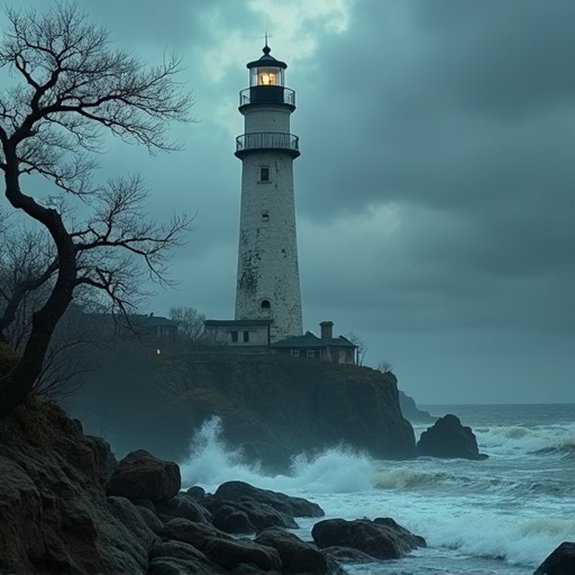
While countless lighthouses dot the world’s coastlines as beacons of safety, some have gained notoriety for harboring spirits from their tragic pasts. These towering structures have witnessed centuries of maritime disasters, lonely deaths, and mysterious disappearances. Their isolated locations and violent histories create perfect conditions for supernatural legends.
From Maine’s rocky shores to California’s foggy cliffs, haunted lighthouses attract paranormal investigators and thrill-seekers alike. Visitors report unexplained footsteps echoing through empty towers, phantom lights appearing in abandoned lantern rooms, and ghostly figures walking the galleries. Former keepers who’ve died on duty supposedly continue their eternal watch, unable to abandon their posts.
These maritime sentinels stand as monuments to both human perseverance and tragedy, where the boundary between history and haunting blurs with each crashing wave.
Maritime Isolation Breeds Supernatural Legends
The extreme isolation of lighthouse keepers shaped many of these supernatural tales. Keepers spent months alone on remote outposts, battling fierce storms and endless monotony. They’d scan empty horizons for hours, their minds playing tricks in the fog and darkness. When accidents claimed lives—drownings, falls from towers, shipwrecks on nearby rocks—survivors couldn’t escape the memories.
Maritime communities passed down stories of keepers who went mad, mysterious disappearances, and unexplained lights after towers went dark. Sailors reported seeing phantom keepers still tending abandoned lights. The ocean’s constant roar masked strange sounds, while salt spray on windows created ghostly shapes. These harsh conditions bred paranoia and fear. Every lighthouse disaster became folklore, transforming tragic deaths into warnings about vengeful spirits who wouldn’t abandon their posts.
Notable Cases or Sightings
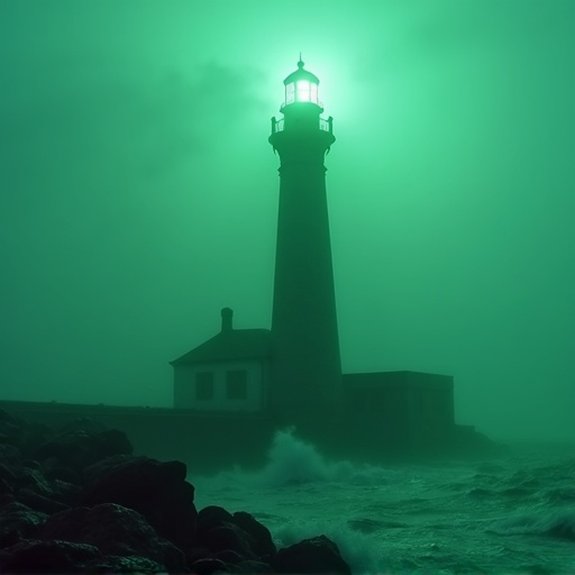
Among hundreds of reported hauntings, several lighthouses have gained international notoriety for their persistent paranormal activity. St. Augustine Lighthouse in Florida attracts investigators who’ve documented shadow figures climbing the tower’s 219 steps and captured voices of children who drowned nearby in 1873. Point Sur Lighthouse in California terrifies visitors when they encounter the ghost of a former keeper who shot himself in the 1900s—witnesses report seeing him pace the gallery at sunset.
Maine’s Seguin Island Light features the phantom piano music of a keeper’s wife who went insane from isolation. The White River Light Station in Michigan hosts the spirit of Captain William Robinson, whose footsteps echo through empty rooms. These locations draw thousands of paranormal enthusiasts annually, each hoping to experience what countless witnesses have reported.
Common Theories or Explanations
Scientists and paranormal researchers have proposed several explanations for lighthouse hauntings that range from environmental factors to psychological phenomena. Many lighthouses sit on rocky coastlines where infrasound—sound waves below human hearing—naturally occurs from crashing waves. These low-frequency vibrations can’t be heard but they’re felt, causing anxiety, hallucinations, and the sensation of being watched.
The isolation and harsh conditions lighthouse keepers endured may’ve created psychological imprints that visitors sense today. Some theorists believe electromagnetic fields from modern equipment interfere with brain activity, triggering ghost sightings.
Others suggest that limestone and quartz in lighthouse foundations store and replay energy from traumatic events—a concept called the “stone tape theory.” Whether these explanations fully account for the phenomena remains debatable among investigators.
Frequently Asked Questions
Can I Book Overnight Stays at Reportedly Haunted Lighthouses?
Yes, visitors can book overnight stays at several reportedly haunted lighthouses across the United States. They’ll find accommodations at places like St. Augustine Lighthouse in Florida and Heceta Head Lighthouse in Oregon through official websites.
What Equipment Do Paranormal Investigators Typically Use at Lighthouse Locations?
Paranormal investigators typically bring EMF detectors, digital voice recorders, infrared cameras, and motion sensors to lighthouses. They’ll use temperature guns for cold spots and K2 meters near spiral staircases where electromagnetic fields naturally concentrate.
Are There Guided Ghost Tours Available at Haunted Lighthouses?
Yes, many haunted lighthouses offer guided ghost tours throughout the year. Tour guides share chilling stories of former keepers, tragic shipwrecks, and unexplained phenomena while visitors explore the historic grounds and climb the towers after dark.
Which Months Have the Most Reported Supernatural Activity at Lighthouses?
October and November typically see the most reported supernatural activity at lighthouses. Paranormal investigators note that autumn’s stormy weather and anniversary dates of historic shipwrecks often coincide with increased ghost sightings during these months.
Do Lighthouse Keepers’ Descendants Ever Share Family Ghost Stories?
Yes, lighthouse keepers’ descendants frequently share family ghost stories passed down through generations. They’ll recount tales of mysterious footsteps, unexplained lights, and spectral figures their ancestors witnessed during lonely nights tending the beacon’s flame.
Haunted Universities: Collegiate Spirits
Haunted Prisons: Beyond Alcatraz

Ghosts in Abandoned Hospitals
About The Author
