Haunted Mansions of the Gilded Age
The Gilded Age’s industrial barons built mansions that now harbor more than memories. These estates, from Newport’s cliff-side palaces to California’s Winchester Mystery House, attract thousands who seek encounters with their notorious residents—long-dead heirs, murdered servants, and reclusive widows. Investigators’ve documented unexplained phenomena in dozens of these properties, yet skeptics dismiss the evidence. What transforms a millionaire’s paradise into a supernatural prison? The answer lies buried in their walls.
Introduction
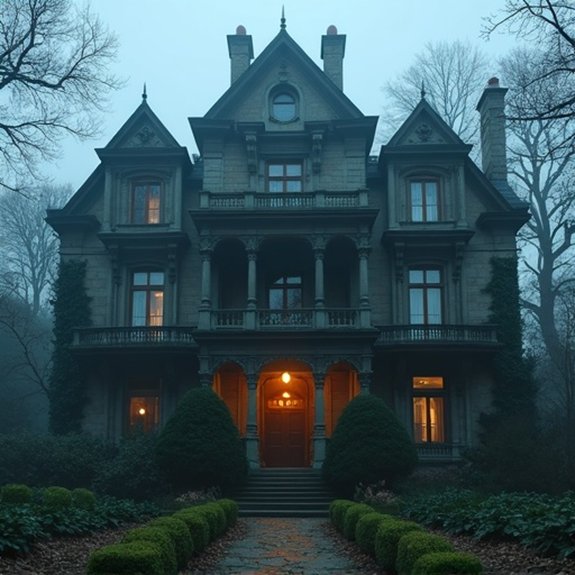
When America’s wealthiest families built their palatial estates during the late 19th century, they couldn’t have imagined their opulent homes would become the nation’s most notorious haunted houses. The Gilded Age’s industrial titans constructed massive mansions that’d rival European castles, pouring millions into marble halls, grand ballrooms, and elaborate gardens. Yet behind these walls of wealth, dark stories emerged—mysterious deaths, family tragedies, and unexplained phenomena that’ve persisted for over a century.
Today’s paranormal investigators frequent these estates, documenting strange occurrences that defy explanation. From Newport’s cliff-side “cottages” to Hudson Valley’s sprawling compounds, these properties attract thousands seeking supernatural encounters. Their histories intertwine architecture with apparitions, creating America’s most intriguing ghost stories that continue enchanting audiences nationwide.
Victorian Wealth Breeds Dark Legends
The extraordinary fortunes amassed during the Victorian era often came at terrible costs—both financial and human—that’d forever mark these grand estates. Railroad barons crushed competitors and exploited workers, while mining magnates sacrificed countless lives in dangerous tunnels. These ruthless practices generated wealth that built America’s most opulent mansions, but they also spawned enduring ghost stories.
Servants whispered about cursed money funding marble staircases and crystal chandeliers. Communities watched industrial accidents claim fathers and sons, then saw those same victims’ spirits reportedly wandering mansion grounds. The Vanderbilts’ Biltmore, Carnegie’s Scottish castle, and Rockefeller’s Kykuit all attracted supernatural tales. Each death in a coal mine or factory fire seemingly added another phantom to these estates’ growing legacies. Victorian society’s stark inequality didn’t just create architectural marvels—it manufactured the perfect conditions for hauntings.
Notable Cases or Sightings
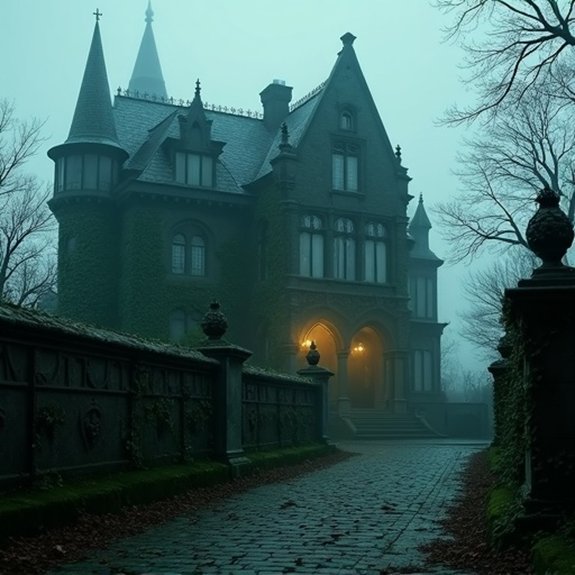
Though skeptics dismiss them as mere folklore, certain Gilded Age mansions have accumulated remarkably consistent eyewitness accounts spanning generations. Newport’s Belcourt Castle reports include visitors photographing unexplained figures in period dress and hearing phantom footsteps in the ballroom. Multiple staff members at San Jose’s Winchester Mystery House have documented doors slamming in sealed wings and piano music from empty rooms.
The Biltmore Estate’s most persistent sighting involves George Vanderbilt himself, spotted reading in the library decades after his death. Guests at Pittsburgh’s Clayton Mansion describe encountering a woman in Victorian mourning attire who vanishes when approached. Security footage from Ohio’s Franklin Castle shows shadows moving through locked areas where motion sensors don’t trigger. These accounts share striking similarities despite witnesses having no prior knowledge of previous reports.
Common Theories or Explanations
While believers point to supernatural causes, researchers have proposed several scientific explanations for these phenomena. Many mansions contain high electromagnetic fields from old wiring, which can trigger hallucinations and feelings of unease. Carbon monoxide leaks from antiquated heating systems often cause confusion, dizziness, and vivid dreams that residents mistake for ghostly encounters.
Infrasound, produced by drafty windows and settling foundations, creates vibrations below human hearing that induce anxiety and peripheral vision disturbances. The power of suggestion also plays a significant role—once someone’s told a house is haunted, they’re more likely to interpret normal sounds as paranormal. Additionally, sleep paralysis explains many bedroom apparitions, while the ideomotor effect accounts for séance table movements and Ouija board sessions popular during the Gilded Age.
Frequently Asked Questions
Can I Book Overnight Stays or Ghost Tours at These Historic Mansions?
Yes, visitors can book overnight stays and ghost tours at many historic Gilded Age mansions. They’ll find various options including guided paranormal investigations, Halloween events, and bed-and-breakfast accommodations at properties like Winchester Mystery House and Biltmore Estate.
Which Gilded Age Mansions Have Been Featured in Horror Movies or Documentaries?
Several Gilded Age mansions have starred in horror films. The Breakers appeared in “Dark Shadows,” while Grey Gardens featured in documentaries. Lyndhurst Castle’s been used for numerous Gothic horror productions, including “House of Dark Shadows.”
Are There Any Mansion Hauntings That Have Been Officially Debunked as Hoaxes?
Yes, investigators’ve debunked several mansion hauntings as hoaxes. The Winchester Mystery House’s “séance room” stories proved fabricated for tourism, and Boldt Castle’s ghostly sightings turned out to be publicity stunts from the 1970s.
What Paranormal Investigation Equipment Works Best in Victorian-Era Architectural Settings?
Paranormal investigators find EMF detectors work effectively in Victorian mansions since old wiring creates baseline readings they can compare against anomalies. They’ll also use thermal cameras to detect cold spots in large rooms with high ceilings.
Do Current Owners of These Mansions Profit From Their Haunted Reputations?
Many owners capitalize on supernatural reputations through ghost tours, paranormal investigations, and Halloween events. They’ve transformed historic properties into profitable attractions, charging premium rates for overnight stays and exclusive access to supposedly haunted rooms.
Are the Hills of Kentucky Filled With Ghost Towns and Spirits?
The Phantom of the Opera Houses
Horror Stories From Abandoned Buildings
About The Author
