Haunted Theatres: Ghosts Behind the Curtain
Theatre ghosts aren’t just folklore. They’re documented phenomena that’ve shaped how performers and stagehands work in historic playhouses worldwide. From phantom footsteps echoing through empty auditoriums to unexplained cold spots during rehearsals, these supernatural encounters follow patterns that span centuries and continents. What drives certain spirits to haunt these creative spaces while others rest peacefully? The answer lies in theatre’s unique relationship with emotion, tragedy, and unfinished business.
Introduction
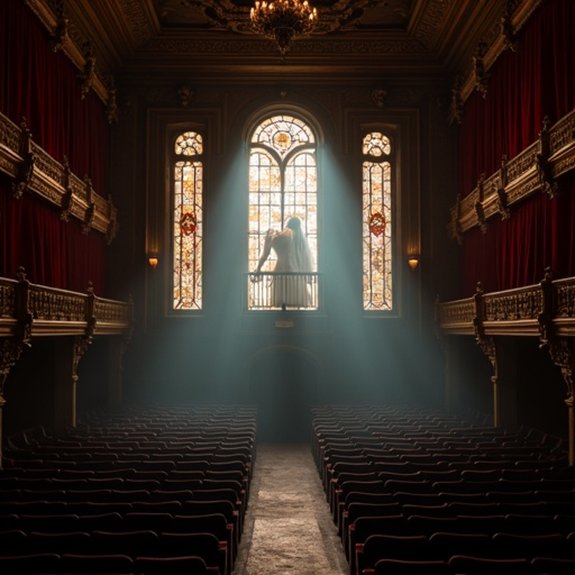
When the house lights dim and audiences settle into their seats, they’re often unaware that some theatres host performances that never made it onto the marquee. Historic playhouses across the world harbor tales of ghostly actors, phantom stagehands, and spectral audiences who’ve refused their final curtain call. These venues blend architectural grandeur with supernatural intrigue, where unexplained footsteps echo through empty corridors and mysterious figures appear in balcony boxes.
Theatre professionals regularly report encounters with resident spirits who slam doors, manipulate lighting systems, and whisper from darkened wings. Some ghosts help productions succeed while others sabotage opening nights. These paranormal presences transform ordinary theatres into extraordinary destinations where the boundary between performance and haunting dissolves, creating spaces where past and present perpetually collide.
Ancient Theatrical Superstitions Emerge
Before electric lights illuminated stages, actors believed malevolent spirits lurked in theatres’ darkest corners, spawning protective rituals that still govern modern productions. Ancient Greek performers wore masks to ward off jealous demons who’d curse successful shows. They’d leave offerings backstage for theatrical deities, believing empty seats invited evil entities.
Medieval troupes wouldn’t perform biblical plays on Fridays, fearing they’d summon actual devils through their portrayals. Chinese opera companies built spirit altars in dressing rooms, burning incense before performances to appease ghostly former actors. Japanese kabuki theatres designated specific entrance doors for spirits, keeping them separate from human performers.
These practices evolved into today’s theatrical taboos: never whistling backstage, avoiding real mirrors in productions, and keeping ghost lights burning on empty stages to pacify restless spirits.
Notable Cases or Sightings
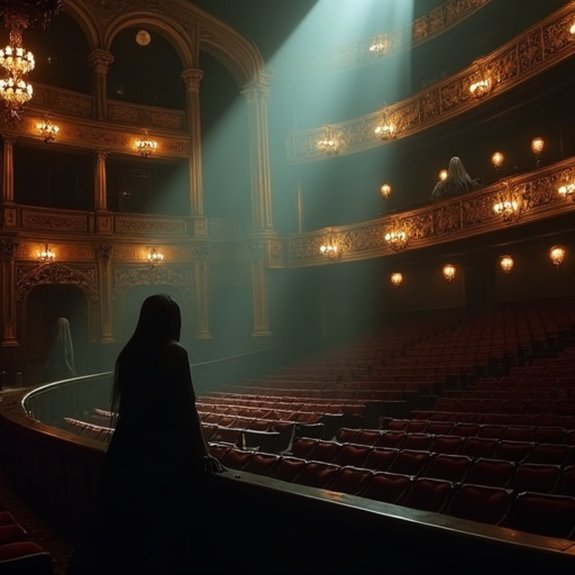
While protective rituals aim to keep spirits at bay, countless theatres worldwide report genuine paranormal encounters that defy explanation. London’s Theatre Royal Drury Lane harbors the Man in Grey, a ghost who’s appeared since the 1840s wearing riding boots and a tricorn hat. Staff members regularly spot him walking through walls during matinees.
New York’s Palace Theatre echoes with cellist Judy‘s performances—she died there in 1937 but continues playing from the orchestra pit. Melbourne’s Princess Theatre hosts Frederick Federici’s spirit, who takes curtain calls after performances of the opera where he died onstage in 1888.
These aren’t isolated incidents. Security footage captures unexplained shadows, temperature drops freeze dressing rooms, and phantom applause fills empty auditoriums. Theatre workers accept these presences as permanent cast members who’ve never left their final stages.
Common Theories or Explanations
Though skeptics dismiss theatrical hauntings as superstition, researchers propose several explanations for these persistent phenomena. Environmental factors top the list—old theatres often harbor electromagnetic fields from outdated wiring, creating sensations of unease and hallucinations. Infrasound, produced by aging ventilation systems, can’t be heard but triggers anxiety and peripheral vision disturbances.
Psychological theories suggest theatres’ emotional intensity imprints on performers and audiences. The power of suggestion amplifies every creak and shadow in these atmospheric spaces. Some parapsychologists argue that limestone and quartz in historic foundations store and replay energy, creating “stone tape” recordings of past events.
Theatre’s inherent drama attracts storytelling. Staff perpetuate ghost tales to enhance mystique, while actors’ superstitious nature makes them hyperaware of unexplained occurrences backstage.
Frequently Asked Questions
Can I Book a Ghost Tour at These Haunted Theatres?
Many haunted theatres offer ghost tours where visitors can explore backstage areas and hear spooky stories. They’ll need to check each theatre’s website for availability, as tours aren’t always regular and some require advance booking.
What Safety Precautions Should Visitors Take in Reportedly Haunted Theatres?
Visitors should stay with their group, avoid restricted areas, and watch for uneven floors in old buildings. They’ll want to bring flashlights for dimly lit spaces and follow all posted signs and guide instructions.
Are Theatre Staff Required to Disclose Paranormal Activity to Patrons?
Theatre staff aren’t legally required to disclose paranormal activity to patrons. They’ll typically share ghost stories as entertainment or marketing, but there’s no obligation to warn visitors about supernatural claims since they’re considered folklore rather than safety hazards.
Do Haunted Theatres Charge Different Ticket Prices Than Non-Haunted Venues?
Haunted theatres don’t typically charge different prices than non-haunted venues. They’ll set ticket costs based on production expenses, seat location, and market demand. Some venues capitalize on ghost stories through special paranormal tours or events.
Which Haunted Theatre Experiences Offer the Most Interactive Ghost Encounters?
The Stanley Hotel’s underground tour and Cincinnati Music Hall’s backstage experiences offer guests the most interactive ghost encounters. They’ll use EMF detectors, participate in séances, and explore areas where apparitions frequently appear to visitors.

Ghostly Children: Myth, Memory, or Residue?

Haunted Mines of Cornwall

Ghost Ships in the Fog: Sailing Phantoms
About The Author
