The Brown Lady Photograph: Real or Hoax?
The Brown Lady photograph‘s captured more than just light and shadow when it emerged from Raynham Hall in 1936. This single image has divided believers and skeptics for decades, sparking fierce debates about paranormal evidence and photographic manipulation. While some insist they’re looking at Lady Dorothy Walpole’s restless spirit descending the staircase, others see nothing more than clever darkroom tricks. The truth behind this notorious photograph remains frustratingly elusive.
Introduction
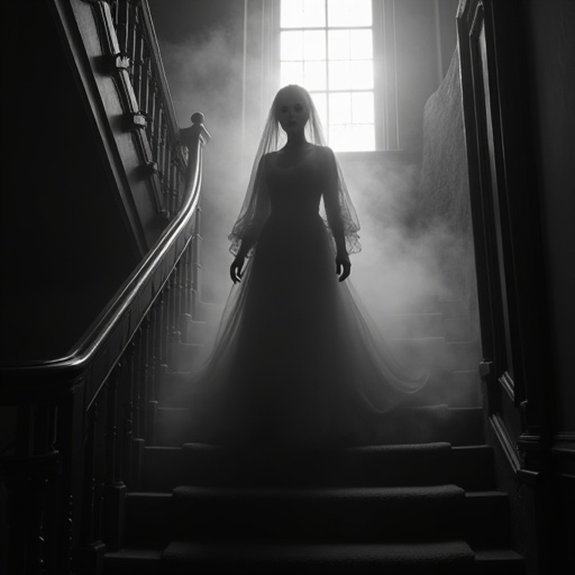
Two photographs have captivated paranormal enthusiasts more than the infamous Brown Lady of Raynham Hall. Captured in 1936 by photographers Hubert Provand and Indre Shira, this ghostly image shows a translucent figure descending a staircase at Norfolk’s historic Raynham Hall. The photograph’s appeared in Country Life magazine that December, instantly becoming one of history’s most debated paranormal images.
The Brown Lady’s legend predates the photograph by centuries. She’s believed to be Lady Dorothy Walpole, who died in 1726 under mysterious circumstances. Witnesses have reported seeing her apparition since the 1830s, including notable figures like King George IV and author Captain Frederick Marryat. The photograph’s authenticity remains contested—skeptics cite double exposure techniques while believers point to the photographers’ credibility and the image’s technical analysis.
Raynham Hall’s Tragic Resident
Lady Dorothy Walpole’s story reads like a gothic tragedy. Born in 1686, she married Charles Townshend, 2nd Viscount Townshend, in 1713. The marriage quickly soured when Charles discovered Dorothy’s alleged affair with Lord Wharton before their wedding. He imprisoned her at Raynham Hall, forbidding her from seeing their children or leaving the estate.
Dorothy died in 1726 under mysterious circumstances. Official records claim smallpox killed her, but locals whispered about murder. Some believed Charles pushed her down the grand staircase in a rage. Others suspected he’d starved her to death in a locked room.
Her ghost supposedly wanders Raynham Hall’s corridors wearing the brown brocade dress she favored in life. Witnesses have reported seeing her gliding down stairs and through walls since the 1830s.
Notable Cases or Sightings
The Brown Lady’s spectral appearances attracted notable witnesses long before photographers captured her image. In 1835, Colonel Loftus encountered her twice during Christmas week at Raynham Hall. He described seeing a woman in brown brocade with empty eye sockets where eyes should’ve been. Captain Frederick Marryat, who’d initially suspected a hoax, changed his mind after seeing the ghost himself in 1836. He’d fired his pistol at the figure, but the bullet passed through harmlessly.
King George IV reportedly saw her standing beside his bed during a stay. Multiple servants quit their positions after encounters, including one who’d witnessed the Brown Lady gliding down the main staircase. These documented sightings from credible sources established the ghost’s reputation decades before Country Life magazine’s photographers arrived in 1936.
Common Theories or Explanations
While believers point to the photograph’s authenticity, skeptics have proposed several explanations for the famous image. Photography experts suggest double exposure, either accidental or deliberate, could’ve created the ghostly figure. The camera’s shutter might’ve remained open while someone descended the stairs, producing the blurred, translucent effect.
Others argue light leaks in the camera or film processing errors caused the anomaly. Some investigators claim the photographers staged the image using a doll or mannequin draped in fabric, then manipulated during development. Temperature variations in Raynham Hall’s drafty corridors could’ve created condensation on the lens, resulting in the misty appearance.
Parapsychologists who accept the photograph’s legitimacy propose it captured residual energy or a time-slip phenomenon rather than a conscious spirit.
Frequently Asked Questions
Who Were the Photographers Who Captured the Brown Lady Image in 1936?
Captain Hubert Provand and Indre Shira captured the Brown Lady photograph in 1936 at Raynham Hall. They’d been hired by Country Life magazine to photograph the estate when they unexpectedly captured the ghostly figure on the staircase.
What Camera Equipment and Film Type Were Used for the Photograph?
They used a glass plate camera with a magnesium flash lamp setup. The photographers loaded Ilford glass plates for the shoot. Shira’s camera equipment wasn’t sophisticated by modern standards but was professional quality for 1936’s technology.
Has the Original Photograph Negative Been Scientifically Tested or Authenticated?
The original negative hasn’t undergone modern scientific authentication. Country Life magazine’s kept the negative in their archives, but they’ve never subjected it to contemporary forensic analysis that could definitively prove or disprove its authenticity.
How Much Money Has the Photograph Generated Through Publications and Licensing?
The photograph’s exact earnings aren’t publicly documented, but it’s generated substantial revenue for Country Life magazine through reprints, licensing deals, and increased circulation. Publishers and documentaries have paid undisclosed fees to feature this famous image.
Are There Any Other Alleged Ghost Photographs From Raynham Hall?
No other alleged ghost photographs from Raynham Hall have gained significant attention. While visitors and staff have reported various paranormal experiences over the centuries, the Brown Lady photograph remains the estate’s only widely known supernatural image.

Ghostly Children: Myth, Memory, or Residue?
Haunted Theatres: Ghosts Behind the Curtain
Ghosts in the White Chambers: Palaces
About The Author
