The Ghosts of Pompeii: Ash-Bound Spirits
The ancient streets of Pompeii don’t just preserve history—they’re said to harbor something far more unsettling. Visitors who’ve walked through the ash-covered ruins report shadowy figures darting between columns and unexplained cold spots near the Villa of Mysteries. Thermal cameras have captured heat signatures where no living person stands. Whether these phenomena stem from tragedy’s echo or something else entirely, Pompeii’s supernatural reputation continues to grow.
Introduction

Vesuvius erupted on August 24, 79 AD, and within hours, the thriving Roman city of Pompeii vanished beneath a suffocating blanket of volcanic ash and pumice. The disaster killed thousands instantly, preserving their final moments in hardened ash. These plaster casts of victims have captivated archaeologists and visitors for centuries, but they’ve also sparked darker tales.
Local guides whisper about strange phenomena near the ruins. Security guards report unexplained footsteps echoing through empty streets after closing time. Tourists claim they’ve captured shadowy figures in photographs where no one stood. Some visitors describe overwhelming sensations of panic near certain buildings, as if they’re experiencing the terror of that fatal day. Whether these accounts stem from overactive imaginations or something more mysterious, Pompeii’s tragic history continues to haunt the modern world.
Vesuvius Erupted August 79 AD
The morning of August 24, 79 AD began like any other in the Bay of Naples, with merchants opening their shops and families preparing their meals. By noon, Mount Vesuvius had awakened. The volcano’s initial explosion sent a massive column of pumice and ash twenty miles into the sky. Winds carried the debris southeast, burying Pompeii beneath twelve feet of volcanic material.
The eruption lasted eighteen hours. Pyroclastic surges—superheated gas and rock traveling at 450 miles per hour—reached the city around midnight. These deadly clouds killed anyone who’d remained. The temperature exceeded 500 degrees Fahrenheit, instantly vaporizing soft tissue while preserving victims’ final positions in hardened ash. Nearly 2,000 people died in Pompeii alone. Herculaneum, Stabiae, and other nearby settlements also perished beneath Vesuvius’s wrath.
Notable Cases or Sightings
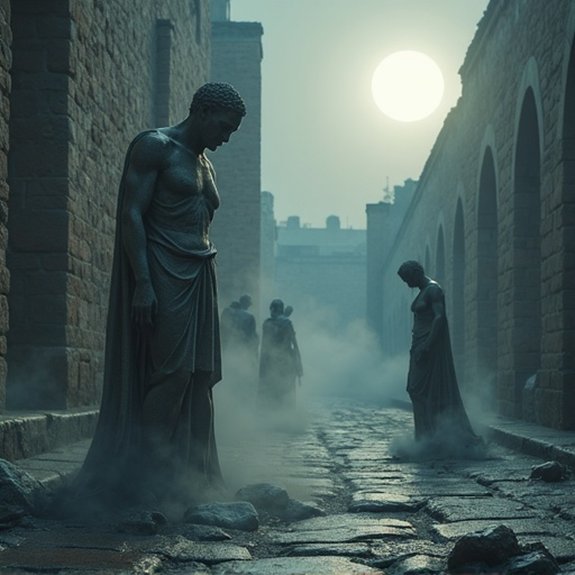
Since Pompeii’s excavation began in 1748, visitors have reported unexplained encounters throughout the ancient city. Guards’ve documented shadow figures moving between ruins after closing hours, particularly near the Villa of Mysteries. In 1971, archaeologist Antonio De Simone claimed he’d heard Latin voices emanating from sealed chambers before opening them. Tourists frequently photograph mysterious mists near the Garden of the Fugitives, where thirteen victims’ plaster casts lie.
The Forum’s witnessed multiple sightings of a translucent figure wearing a toga, often appearing at dawn. Night watchmen won’t patrol alone near the Lupanar brothel, where they’ve heard laughter and footsteps from empty rooms. Most recently, thermal cameras captured humanoid heat signatures in 2019 where no living person stood, sparking renewed paranormal investigations.
Common Theories or Explanations
Paranormal researchers offer several explanations for Pompeii’s ghostly phenomena, ranging from psychological to environmental factors. Some theorists believe the volcanic ash‘s mineral composition creates electromagnetic fields that trigger hallucinations in sensitive individuals. The site’s preserved death poses and human casts likely amplify visitors’ emotional responses, producing false paranormal experiences.
Others propose the “stone tape theory,” suggesting Pompeii’s volcanic rock absorbed the victims’ final moments like a recording. They claim these imprinted energies replay under specific atmospheric conditions. Skeptics attribute sightings to pareidolia—the brain’s tendency to perceive familiar patterns in random stimuli. The ruins’ shadows, coupled with tourists’ expectations of encountering spirits, create perfect conditions for misinterpretation. Environmental scientists note that underground gas emissions from Mount Vesuvius might cause disorientation and visual disturbances, explaining many reported encounters.
Frequently Asked Questions
Can Tourists Visit Pompeii at Night to Experience Paranormal Activity?
Yes, tourists can book special nighttime tours of Pompeii, though they’re primarily for experiencing the site’s atmosphere rather than paranormal encounters. These evening visits offer unique perspectives of the ruins under moonlight and artificial illumination.
What Equipment Do Ghost Hunters Use When Investigating Pompeii’s Ruins?
Ghost hunters investigating Pompeii’s ruins typically carry EMF detectors, thermal cameras, digital voice recorders, and infrared equipment. They’ll also use motion sensors and full-spectrum cameras to capture potential paranormal evidence among the ancient volcanic remains.
Are There Specific Areas in Pompeii With More Supernatural Reports?
Ghost hunters report the Villa of Mysteries generates the most paranormal activity, while the amphitheater’s seen unexplained shadows. The Forum’s ancient temples attract investigators who’ve documented cold spots, and the brothel area’s notorious for disembodied voices.
Have Any Psychic Mediums Attempted to Communicate With Pompeii’s Spirits?
Yes, several psychic mediums have visited Pompeii claiming they’ve contacted ancient spirits. They’ve reported sensing overwhelming fear, confusion, and pain from victims who don’t realize they’re dead, still trapped in their final moments of terror.
Do Local Guides Share Ghost Stories During Official Pompeii Tours?
Some official guides don’t share ghost stories during tours, maintaining historical focus, while others occasionally mention supernatural encounters visitors’ve reported. They’ll typically note strange sounds near the amphitheater or unexplained shadows without endorsing paranormal claims.

The Apparition in the Mirror: Ghostly Reflections

Phantom Black Dogs: Guardians or Harbingers?
Are Paranormal Encounters Tied to EMF Fields?
About The Author
