The Haunted Palaces of India
India’s ancient palaces harbor more than architectural splendor. Locals won’t venture near certain royal residences after sunset, and there’s compelling evidence behind their fears. Modern investigators have documented unexplained phenomena within these centuries-old walls, while historians trace disturbing patterns in the deaths of former inhabitants. The connection between tragic royal histories and today’s paranormal reports reveals something unsettling about these monuments that tourism boards don’t advertise.
Introduction
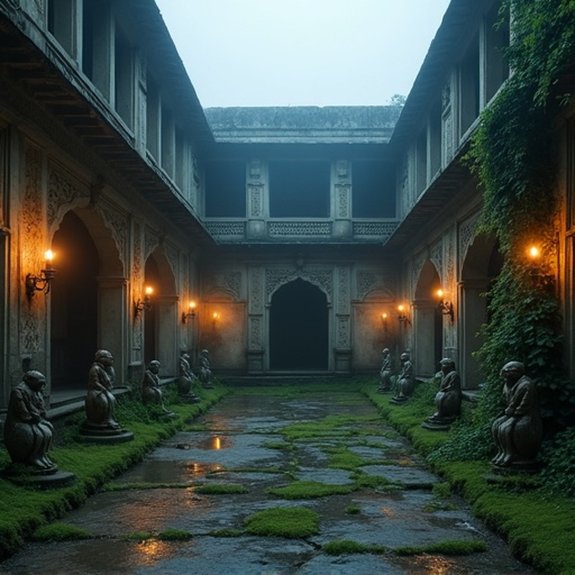
While India’s magnificent palaces showcase centuries of royal splendor and architectural brilliance, many harbor dark secrets that have transformed them into some of Asia’s most notorious haunted sites. These former royal residences attract paranormal enthusiasts and historians who’re drawn to their supernatural legends. From Rajasthan’s desert fortresses to Bengal’s crumbling mansions, each palace tells tales of tragic deaths, betrayals, and restless spirits. In addition to the haunting stories that fill the air, ghostly experiences in London palaces have long been a source of fascination for both locals and tourists alike. From the eerie whispers in the Tower of London to the shadowy figures said to roam Buckingham Palace, these locations conjure an irresistible allure. Visitors report feeling sudden chills and encountering inexplicable phenomena, as the history of each palace clings to its very walls.
Visitors report unexplained phenomena including phantom footsteps, mysterious lights, and ghostly apparitions of ancient royalty. Local communities’ve preserved these stories through generations, blending historical facts with folklore. Whether one believes in the paranormal or not, these palaces offer fascinating glimpses into India’s complex past where power, tragedy, and mystery intersect. They’ve become cultural landmarks that challenge visitors to confront the shadowy boundaries between history and legend.
Ancient Royal Curses Persist
Although centuries have passed since their inception, powerful curses placed by dying monarchs and wronged royals continue to plague India’s most prominent palaces. Bhangarh Fort’s curse stems from Princess Ratnavati’s rejection of a tantric’s advances—he’d cursed the fortress before his death, ensuring its eternal desolation. At Mehrangarh Fort, a forced widow’s curse during its foundation promised seven generations of heirless rulers, which proved accurate. Kuldhara village near Jaisalmer remains abandoned after Paliwal Brahmins cursed it following their persecution by Salim Singh.
These maledictions aren’t mere folklore. Locals won’t enter Bhangarh after sunset, obeying Archaeological Survey restrictions. Mehrangarh’s royal family still performs rituals to appease disturbed spirits. Even skeptics report unexplained phenomena at these sites—sudden temperature drops, disembodied voices, and equipment failures that defy logical explanation.
Notable Cases or Sightings
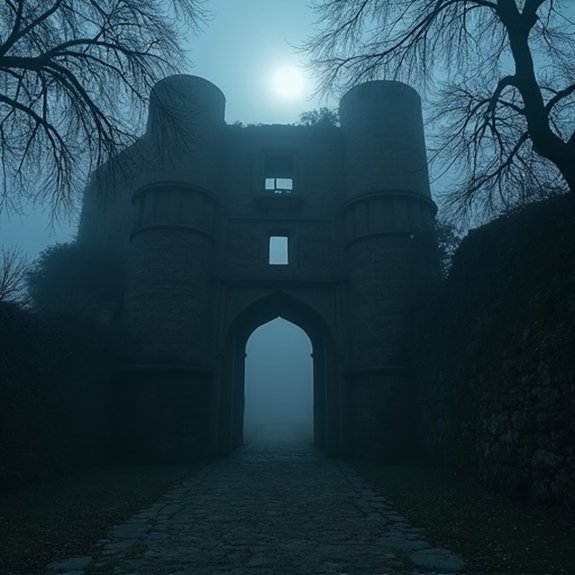
Several documented encounters at India’s haunted palaces have gained credibility through multiple witness testimonies and official records. At Bhangarh Fort, guards’ve reported seeing a princess dancing on the rooftops during full moon nights, while visitors’ve photographed unexplained orbs and shadows near the main temple. The Archaeological Survey of India’s night patrol logs from 2018 mention “unusual activities” requiring evacuation.
Kuldhara’s abandoned palace witnessed mass sightings in 2013 when thirty tourists simultaneously heard children’s laughter from empty chambers. Local police filed reports after finding fresh footprints in dust-sealed rooms. At Shaniwarwada Fort, security cameras’ve captured doors opening without human contact, and maintenance staff refuse night shifts after multiple workers claimed they’d seen the young prince’s apparition near the fountain where he drowned.
Common Theories or Explanations
Paranormal researchers’ve proposed electromagnetic field disturbances as the primary explanation for ghostly encounters at India’s ancient palaces. They’ve documented unusual magnetic readings near reported hotspots, suggesting natural energy fields affect human perception and create hallucinatory experiences.
Historians attribute sightings to psychological factors. The power of suggestion, combined with these structures’ violent histories, primes visitors’ minds for supernatural interpretations of ordinary phenomena. Sound acoustics in palace corridors amplify normal noises into seemingly otherworldly whispers.
Environmental scientists point to infrasound—vibrations below human hearing range—produced by old architecture’s settling foundations and wind patterns through ancient passages. These frequencies can’t be heard but trigger anxiety, unease, and peripheral vision disturbances. Additionally, toxic mold growth in centuries-old walls releases spores that’ve been linked to hallucinations when inhaled.
Frequently Asked Questions
Can Tourists Visit These Haunted Palaces at Night?
Most haunted Indian palaces don’t allow night visits for tourists due to safety concerns and restricted hours. Some locations like Bhangarh Fort explicitly prohibit entry after sunset. Travelers can’t typically explore these sites during nighttime.
What Is the Entry Fee for Visiting These Palaces?
Entry fees vary considerably across India’s haunted palaces. Bhangarh Fort charges ₹25 for Indians and ₹200 for foreigners. Shaniwar Wada’s entry costs ₹30. Most palaces charge between ₹10-₹50 for domestic visitors and ₹100-₹300 for international tourists.
Are Photography and Videography Allowed Inside the Haunted Areas?
Photography and videography policies vary greatly across India’s haunted palaces. Some locations don’t permit cameras in restricted areas, while others allow photography with special permits. Visitors should check each palace’s specific rules before they’re planning their visit.
Which Months Are Best for Visiting These Haunted Palaces?
October through March offer the best visiting conditions for India’s haunted palaces. Travelers’ll find cooler temperatures and clearer skies during these months. The winter season’s pleasant weather makes exploring these mysterious sites more comfortable for visitors.
Are Guided Ghost Tours Available at These Locations?
Yes, several haunted palaces offer guided ghost tours. Bhangarh Fort provides evening walks, while Kuldhara’s abandoned village hosts night tours. Local guides at Shaniwar Wada and Fernhills Palace share spine-chilling stories during organized visits.

What Lies Beneath the Great Lakes Triangle?

Ghosts in Castles: Europe’s Haunted Thrones

Haunted Mines of Cornwall
About The Author
