The Spirit Well: Ghosts in Wells
Wells have always attracted ghost stories, and it’s not hard to see why. These deep, dark shafts into the earth have witnessed centuries of human drama—accidental drownings, murders, and suicides. From Wales to Japan, locals whisper about spectral figures emerging from their depths at twilight. But what makes certain wells become haunted while others don’t? The answer might lie deeper than anyone expects.
Introduction
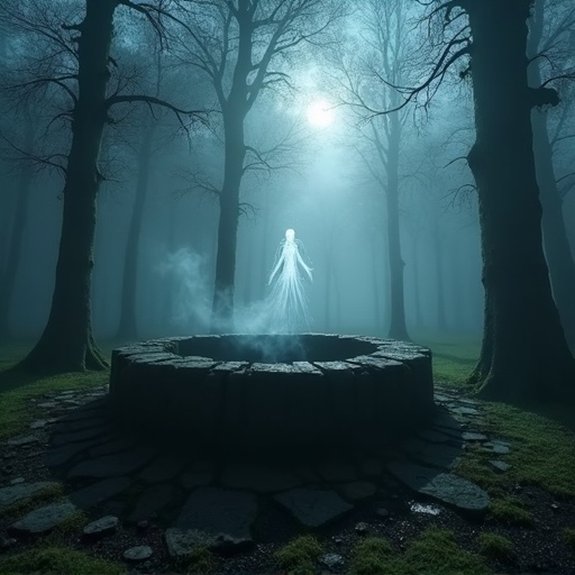
While tales of haunted houses and ghostly graveyards have captivated people for centuries, wells harbor their own unique supernatural folklore that’s often overlooked. These deep, dark shafts into the earth have served as essential water sources throughout history, but they’ve also become repositories for some of humanity’s most chilling ghost stories.
Wells create perfect conditions for supernatural legends. Their narrow openings lead to seemingly bottomless depths, where darkness swallows light and echoes distort sound. People have fallen into wells, drowned in their waters, and used them to hide terrible secrets. Each tragedy adds another layer to the well’s haunted reputation. From Europe’s ancient village wells to America’s abandoned farmstead water sources, these structures attract paranormal reports of phantom voices, mysterious lights, and spectral figures emerging from their depths.
Ancient Wells as Portals
Since ancient civilizations first dug deep into the earth for water, they’ve viewed wells as more than mere utilitarian structures—many cultures believed these openings served as direct portals to otherworldly territories. Celtic peoples considered wells sacred gateways where mortals could communicate with spirits dwelling beneath. They’d toss offerings—coins, jewelry, weapons—into these depths to appease supernatural entities.
Romans built temples around significant wells, believing water spirits inhabited them. Japanese folklore describes wells as passages for yokai and vengeful spirits to enter the physical world. Medieval Europeans thought Satan’s demons emerged through abandoned wells at night.
This portal concept wasn’t arbitrary. Wells represented literal openings into darkness, connecting the surface world with mysterious subterranean domains where ancient peoples believed the dead resided.
Notable Cases or Sightings
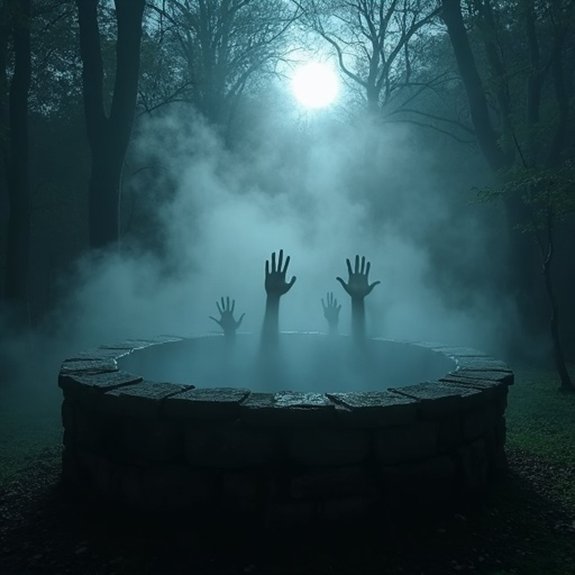
These ancient beliefs about wells as supernatural gateways aren’t just folklore—documented encounters throughout history have reinforced humanity’s fear of these dark openings. In 1879, witnesses at Caerphilly Castle’s well reported seeing a spectral woman who’d allegedly drowned there centuries earlier. She’s appeared regularly since, her pale form rising from the depths before vanishing.
Japan’s Okiku well attracts thousands annually after reports of counting voices echoing from below—supposedly the ghost of a servant girl murdered and thrown down in 1500. Multiple recordings have captured unexplained sounds.
The Leap Castle well in Ireland gained notoriety when workers discovered skeletal remains in 1922. Since then, visitors’ve reported shadow figures emerging from its mouth and the overwhelming sensation of being watched from within the stone-lined darkness.
Common Theories or Explanations
Although skeptics dismiss well hauntings as superstition, researchers’ve proposed several explanations for these persistent phenomena. Environmental factors play a significant role—wells produce natural acoustics that amplify sounds, creating eerie echoes mistaken for voices. The confined spaces trap gases like methane and carbon dioxide, which can cause hallucinations and feelings of dread.
Psychological theories suggest that wells trigger primal fears of darkness and drowning. The brain’s pattern recognition system often misinterprets shadows and reflections as faces or figures. Historical trauma associated with well-related deaths reinforces collective memories that manifest as ghost stories.
Some paranormal investigators claim wells act as portals between dimensions, while others believe limestone and granite conduct electromagnetic energy that records past events. These stones supposedly replay traumatic moments like supernatural recordings.
Frequently Asked Questions
What Should I Do if I Encounter a Ghost Near a Well?
If someone encounters a ghost near a well, they shouldn’t approach or interact with it. They’d better leave the area calmly, avoid looking back, and seek help from local spiritual authorities who’ve handled supernatural occurrences.
Can Well Ghosts Physically Harm People or Just Frighten Them?
Well ghosts can’t physically harm people directly, but they’ve caused accidents through fear. Victims have fallen into wells while fleeing or suffered heart attacks from fright. The ghosts themselves only manifest as apparitions and sounds.
Are There Specific Times When Well Ghost Activity Increases?
Well ghost activity typically increases during midnight hours, full moons, and autumn months. They’re most active on anniversary dates of drownings or tragedies. Fog and mist also amplify their presence, as moisture strengthens their manifestations.
How Can I Protect My Property’s Well From Becoming Haunted?
One can’t prevent wells from attracting spirits, but they’ll reduce risks by maintaining the well’s structure, blessing it annually with salt circles, installing iron grating, and avoiding disturbing historical artifacts found during drilling or repairs.
Do Modern Wells Attract Ghosts Like Ancient Ones Do?
Modern wells don’t attract ghosts as readily as ancient ones. They lack the centuries of human drama, forgotten rituals, and accumulated psychic energy that make old wells spiritual magnets. Technology’s sterile efficiency repels most entities.



About The Author
