The Terrible Mother Archetype
Jung’s concept of the Terrible Mother reveals humanity’s darkest maternal fears. She’s the suffocating force that devours rather than nurtures, the mother who won’t let go. This archetype appears across cultures—from blood-drinking Kali to fairy tale witches—yet modern psychology suggests she’s more than myth. Real mothers can embody these destructive patterns through manipulation and narcissistic control. But what drives this transformation from protector to predator?
Introduction

The Terrible Mother represents one of humanity’s most profound and unsettling psychological patterns—a dark feminine force that devours, destroys, and suffocates rather than nurtures. She’s emerged across cultures through myths, fairy tales, and religious narratives, embodying the shadow side of maternal power. Carl Jung identified this archetype as a fundamental aspect of the collective unconscious, manifesting in figures like Kali, Medusa, and the witch in Hansel and Gretel.
This archetype reflects humanity’s ambivalent relationship with dependency and control. She appears when motherhood becomes possessive, when protection transforms into imprisonment, and when love turns toxic. Modern psychology recognizes her influence in narcissistic parenting, emotional manipulation, and codependent relationships. Understanding this archetype helps individuals recognize destructive patterns and navigate the complex terrain of maternal relationships.
Ancient Mythological Devouring Goddesses
Kali dances on corpses in Hindu mythology, her tongue dripping blood while she wears a garland of severed heads—she’s perhaps the most vivid embodiment of the devouring mother archetype. She represents time’s destructive force, consuming all life she creates.
Ancient Greece’s Medea murdered her own children for revenge, while Lamia devoured infants after losing her offspring to Hera’s jealousy. The Mesopotamian Tiamat, primordial goddess of chaos, turned against her divine children and threatened to swallow creation itself.
These goddesses weren’t simply evil. They embodied nature’s ruthless cycle—creation necessitating destruction. The Aztec Coatlicue wore a skirt of serpents and human hearts, simultaneously birthing and devouring. Egypt’s Ammit waited to consume unworthy souls, while Celtic mythology’s Morrígan fed on battlefield carnage. Each culture recognized this dark maternal force.
Notable Cases or Sightings
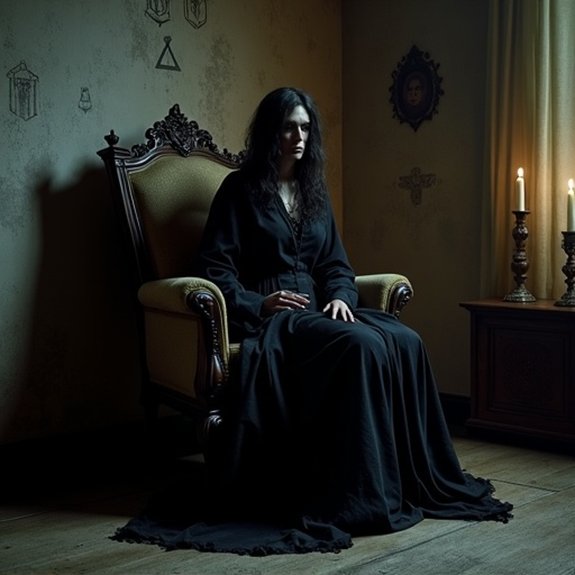
While ancient myths depicted the devouring mother as divine, modern psychology has documented real-world manifestations of this archetype through disturbing case studies and cultural phenomena. The Münchausen by proxy cases exemplify this pattern, where mothers harm their children to gain attention and sympathy. Marybeth Tinning‘s conviction for murdering her nine children between 1972 and 1985 shocked America and revealed the archetype’s deadly potential.
Cultural sightings appear in Japan’s “education mothers” who’ve driven children to suicide through extreme academic pressure. The “stage mother” phenomenon has produced countless memoirs detailing psychological abuse. Literature hasn’t ignored this: Stephen King’s “Carrie” features Margaret White as the suffocating religious fanatic. These cases demonstrate how the terrible mother archetype transcends mythology, manifesting in real behaviors that psychologists now recognize as severe personality disorders affecting family systems worldwide.
Common Theories or Explanations
Psychologists haven’t agreed on a single explanation for why the terrible mother archetype appears across cultures and time periods. Jung’s theory suggests it’s rooted in humanity’s collective unconscious, representing the shadow side of maternal energy. He argued that every positive archetype contains its opposite, making the terrible mother inevitable.
Evolutionary psychologists propose it reflects ancient survival fears. Mothers who couldn’t nurture or actively harmed offspring threatened group survival, embedding this terror in human psychology.
Feminist scholars offer different interpretations. They argue patriarchal societies created the terrible mother to control women’s power and justify male dominance. By demonizing female authority, cultures reinforced gender hierarchies.
Modern trauma theorists link the archetype to attachment disruptions. Children who experience maternal neglect or abuse may internalize these experiences as universal patterns.
Frequently Asked Questions
How Can Someone Heal From Experiencing the Terrible Mother in Their Own Upbringing?
They’ll need to acknowledge the wounds, grieve what they didn’t receive, and separate their mother’s limitations from their own worth. Therapy helps them rework internalized patterns, establish boundaries, and develop self-compassion while building healthier relationships.
What’s the Difference Between the Terrible Mother and Dark Feminine Archetypes?
The terrible mother archetype specifically represents destructive maternal forces that devour or abandon children, while the dark feminine encompasses broader shadow aspects including sexuality, chaos, death, and transformation. They’re related but the dark feminine’s scope extends beyond motherhood.
How Does This Archetype Manifest in Modern Pop Culture and Media?
The Terrible Mother appears in horror films as possessive mothers, Disney’s evil stepmothers, and thriller protagonists who’ll destroy anyone threatening their children. She’s the manipulative matriarch in family dramas and the consuming corporate “mother” figure.
Can Men Embody or Experience the Terrible Mother Archetype?
Yes, men can embody the terrible mother archetype through overprotective, smothering, or destructively nurturing behaviors. They’ll manifest these traits in parenting, leadership, or caregiving roles where they control others through toxic compassion or emotional manipulation.
What Therapeutic Approaches Work Best for Addressing Terrible Mother Complexes?
Jungian analysis, inner child work, and somatic therapies effectively address terrible mother complexes. Therapists help clients recognize projections, process grief, and establish boundaries. EMDR and attachment-based approaches also heal developmental wounds from maternal trauma.

Haunted Mansions of the Gilded Age

Ghost Ships That Sail the Seas Forever

Spirits of the Titanic: Underwater Hauntings
About The Author
