The Devil’s Footprints: First-Hand Accounts
On February 9, 1855, Devon’s residents woke to find strange hoof-like prints stretching over 100 miles across their snow-covered countryside. The tracks didn’t follow any logical path—they crossed rooftops, scaled walls, and appeared on both sides of rivers. Local clergy and scientists couldn’t explain the phenomenon. What eyewitnesses saw that winter morning would spark debates about supernatural visitors and natural explanations that persist today.
Introduction
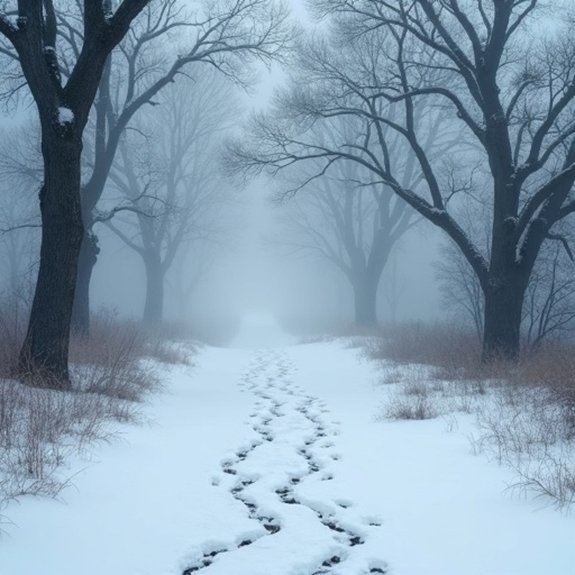
When dawn broke on February 9, 1855, residents across Devon, England, discovered a phenomenon that would baffle investigators for generations. Strange hoof-like prints appeared overnight in the snow, stretching over 100 miles through towns, villages, and countryside. The tracks didn’t follow typical animal patterns—they crossed rooftops, scaled walls, and continued uninterrupted over haystacks and frozen rivers. Each print measured about four inches long and three inches wide, spaced eight inches apart in a single file line. Witnesses reported seeing the marks traverse through Topsham, Lympstone, Exmouth, and dozens of other locations. The mysterious trail sparked immediate panic among locals who couldn’t explain how any creature could’ve covered such vast distances in one night, leading many to attribute the prints to supernatural forces.
Devon’s 1855 Winter Mystery
Although the winter of 1855 had brought typical snowfall to Devon, nothing could’ve prepared residents for the inexplicable discovery that awaited them that February morning. On February 9th, locals found mysterious hoof-like tracks stretching over 100 miles across the countryside. The prints measured four inches long and three inches wide, appearing in a single file with eight-inch intervals between each mark.
What disturbed witnesses most wasn’t just the tracks’ vast distance—they’d crossed walls, rooftops, haystacks, and even the River Exe as if unimpeded by physical barriers. The prints appeared to have been burned or branded into the snow rather than simply pressed. Towns from Exmouth to Totnes reported identical markings, all seemingly created during the same night. The phenomenon sparked immediate investigation and widespread panic among Devon’s communities.
Notable Cases or Sightings
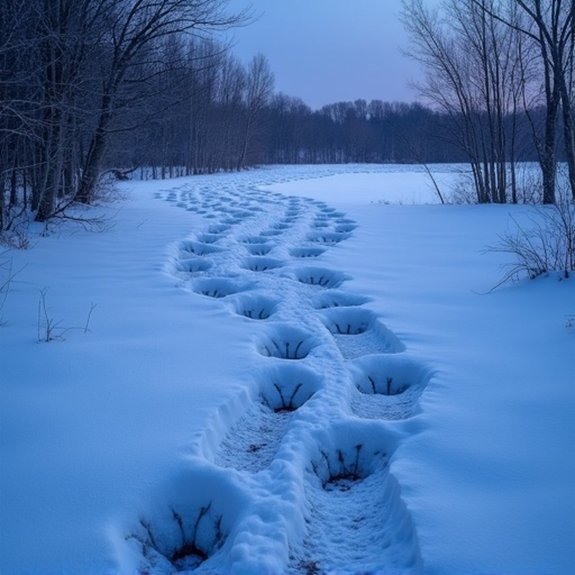
Witnesses across Devon recorded remarkably consistent accounts of the mysterious tracks that February morning. In Topsham, residents discovered prints crossing rooftops and scaling fourteen-foot walls. The marks appeared on both sides of the River Exe, suggesting whatever made them had crossed the two-mile-wide estuary.
Reverend G.M. Musgrave documented tracks running through his Exmouth garden and continuing over locked gates. In Dawlish, baker William Board found prints circling his shop before vanishing at a solid brick wall. Multiple farmers reported the trail passing through their hayricks without disturbing the hay.
The most puzzling sighting occurred in Torquay, where tracks led directly to a drainage pipe‘s four-inch opening, emerged on the other side, and continued uninterrupted across town. These accounts sparked widespread speculation about the phenomenon’s origin.
Common Theories or Explanations
As news of the mysterious tracks spread throughout Devon, scientists and naturalists proposed various explanations for the phenomenon. Some theorized that a kangaroo had escaped from a private menagerie, though no missing animals were reported. Others suggested badgers, otters, or rats moving in unusual patterns due to the harsh winter conditions.
Meteorologists argued the marks weren’t footprints at all but resulted from atmospheric conditions creating peculiar frost patterns. A few scholars proposed that a weather balloon’s trailing ropes had dragged across the snow, leaving the strange impressions.
Religious leaders offered supernatural interpretations, claiming they were warnings from heaven or marks of demonic presence. Skeptics dismissed the entire event as mass hysteria, suggesting multiple unrelated animal tracks had been misinterpreted by frightened villagers seeking extraordinary explanations.
Frequently Asked Questions
How Can I Report a Modern Sighting of the Devil’s Footprints Phenomenon?
They’d document the discovery with photos and measurements, then contact local paranormal investigators, museums, or historical societies. They’ll also post findings on cryptozoology forums and social media platforms dedicated to unexplained phenomena research.
Are There Any Museums or Exhibits Dedicated to the Devil’s Footprints Mystery?
While there isn’t a museum solely dedicated to the Devil’s Footprints, Devon’s local history museums occasionally feature exhibits about the 1855 phenomenon. The Royal Albert Memorial Museum in Exeter has displayed related artifacts and documents.
Which Books Provide the Most Comprehensive Coverage of This Phenomenon?
Mike Dash’s “The Devil’s Hoofmarks” offers the most thorough investigation, while Geoffrey Household’s “The Devil’s Footprints” and Rupert Gould’s “Enigmas” provide detailed analyses. They’ve compiled extensive witness testimonies and contemporary newspaper accounts from 1855.
Have Any Films or Documentaries Been Made About the Devil’s Footprints?
While no major theatrical films exist, several documentaries have explored the Devil’s Footprints mystery. The BBC’s produced segments for programs like “Mysterious Britain,” and independent filmmakers’ve created shorter documentaries examining the 1855 Devon incident’s evidence.
Can Tourists Visit the Original Locations Where the Footprints Appeared in Devon?
Yes, tourists can visit the Devon locations where the Devil’s Footprints appeared in 1855. They’ll find towns like Topsham, Lympstone, and Exmouth still exist, though the original snow tracks have long since vanished from history.
The Disappearance of the Flannan Isle Keepers

Are Mysterious Booms Around the U.S. a Sign?

The Somerton Man’s True Identity
About The Author
